Painting guide · Naperville, IL
When to paint a house exterior in Naperville, month by month
Planning an exterior repaint and wondering when to book it? The weather here sets the calendar, and the nights matter more than the afternoons.
We answer 24/7 and book walk-throughs on the first call.
By Douglas Woodruff, Painting Guides Editor · Updated September 2026
Guide
When to paint outside
By Douglas Woodruff · September 2026
Short answer
The exterior painting season in Naperville, IL runs from about late April through October. Chicago-area normals put average highs at 57F in April, 68F in May, 83F in July and 63F in October, and exterior paint needs the air and the surface to stay above the product's minimum temperature until it has cured, which is why overnight lows decide the start and end of the season.
Part 1
Temperature is about the night, not the afternoon
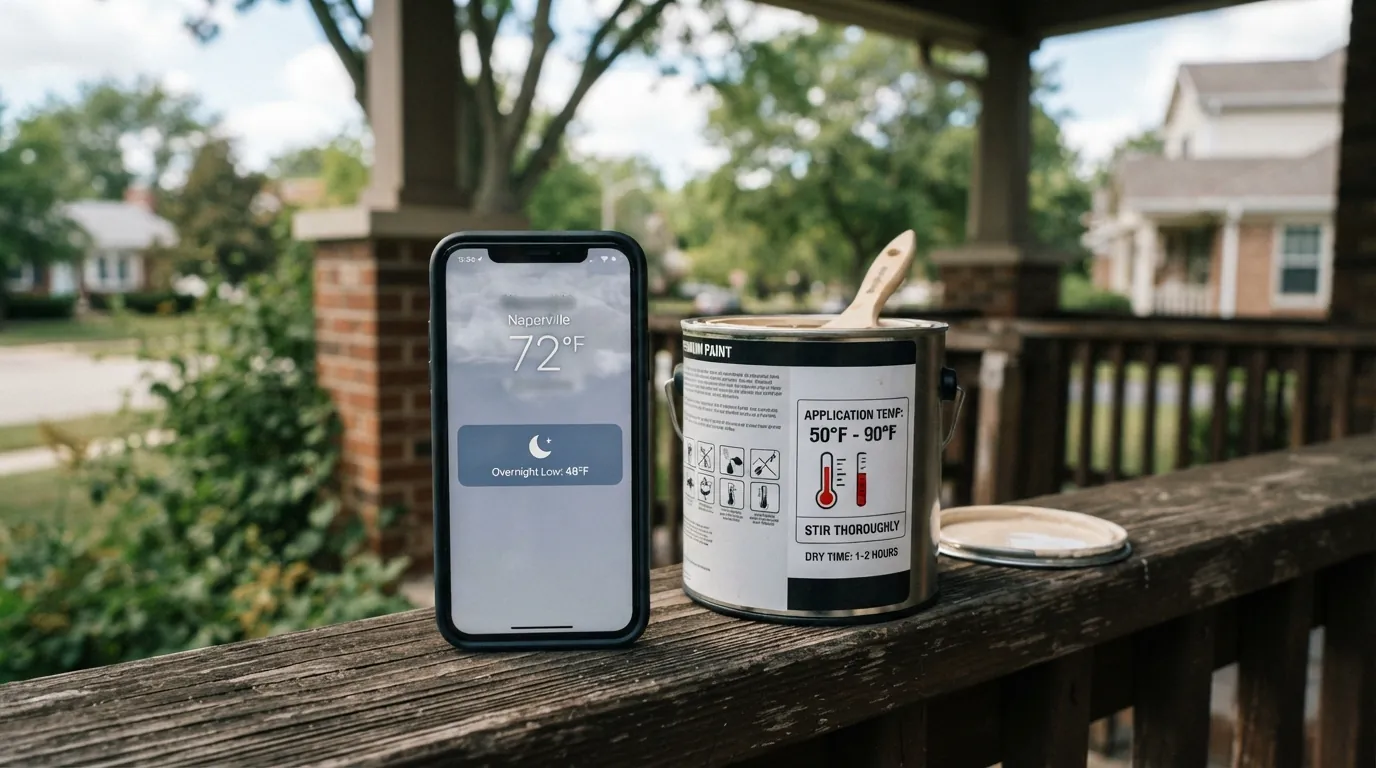
A 60F afternoon in April looks like painting weather, but paint keeps curing through the evening, and a cold night or heavy dew can stop it from forming a proper film. Every can lists a minimum application temperature; many modern acrylics go down to about 35F, others need 50F, and that minimum applies to the siding as well as the air.
So an exterior painter watches the overnight low and the dew point as closely as the daytime high. On cool days work starts after the morning dew has dried and stops early enough for the last coat to set before evening.
Part 2
Late spring: the calendar fills early
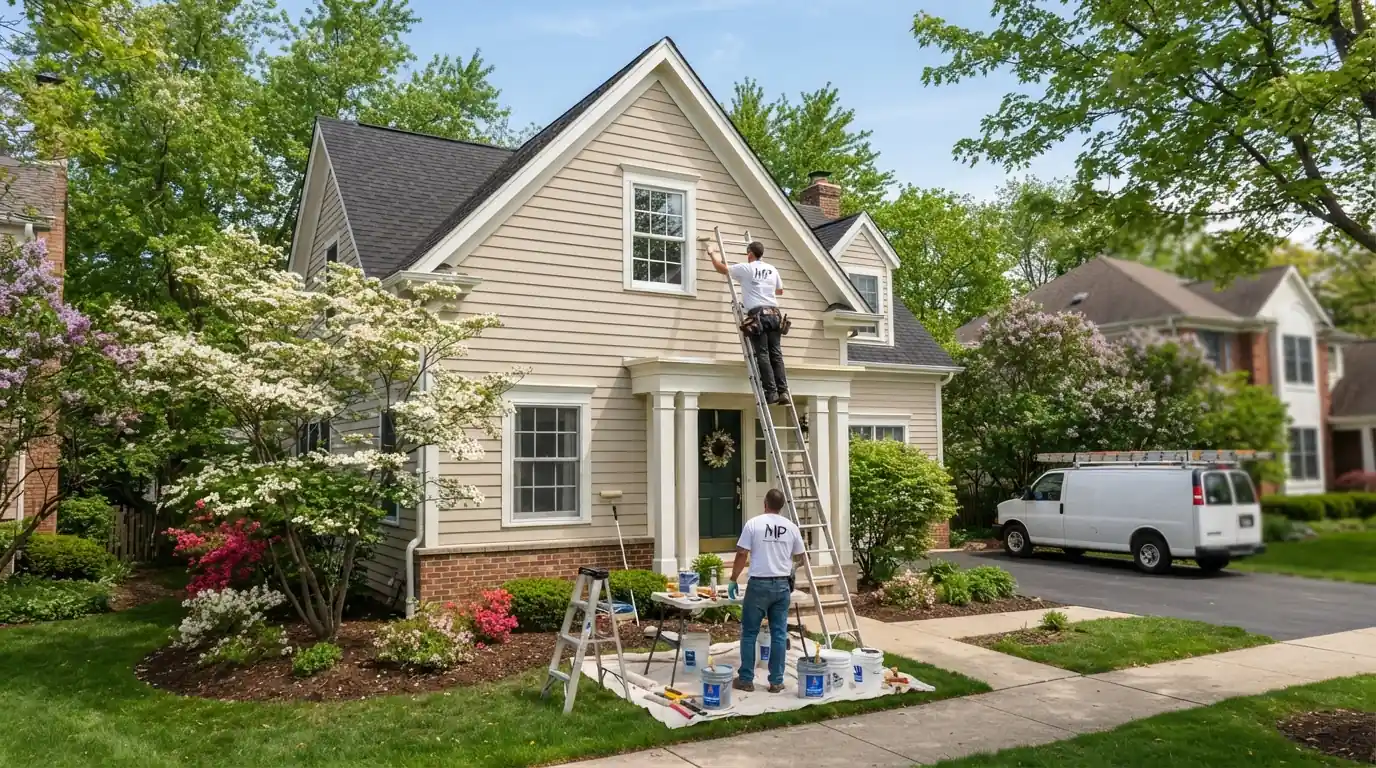
May and June are the most requested months. The average high climbs from 57F in April to 68F in May, nights warm up, and homeowners want the house done before summer. That means spring dates are booked months ahead.
Spring is also when winter damage shows: peeling on the south side, gray sills and soft trim. Booking a walk-through in late winter gives time to plan wood repairs and choose colors, so the painting can start as soon as the weather allows.
Part 3
Midsummer heat, sun and storms
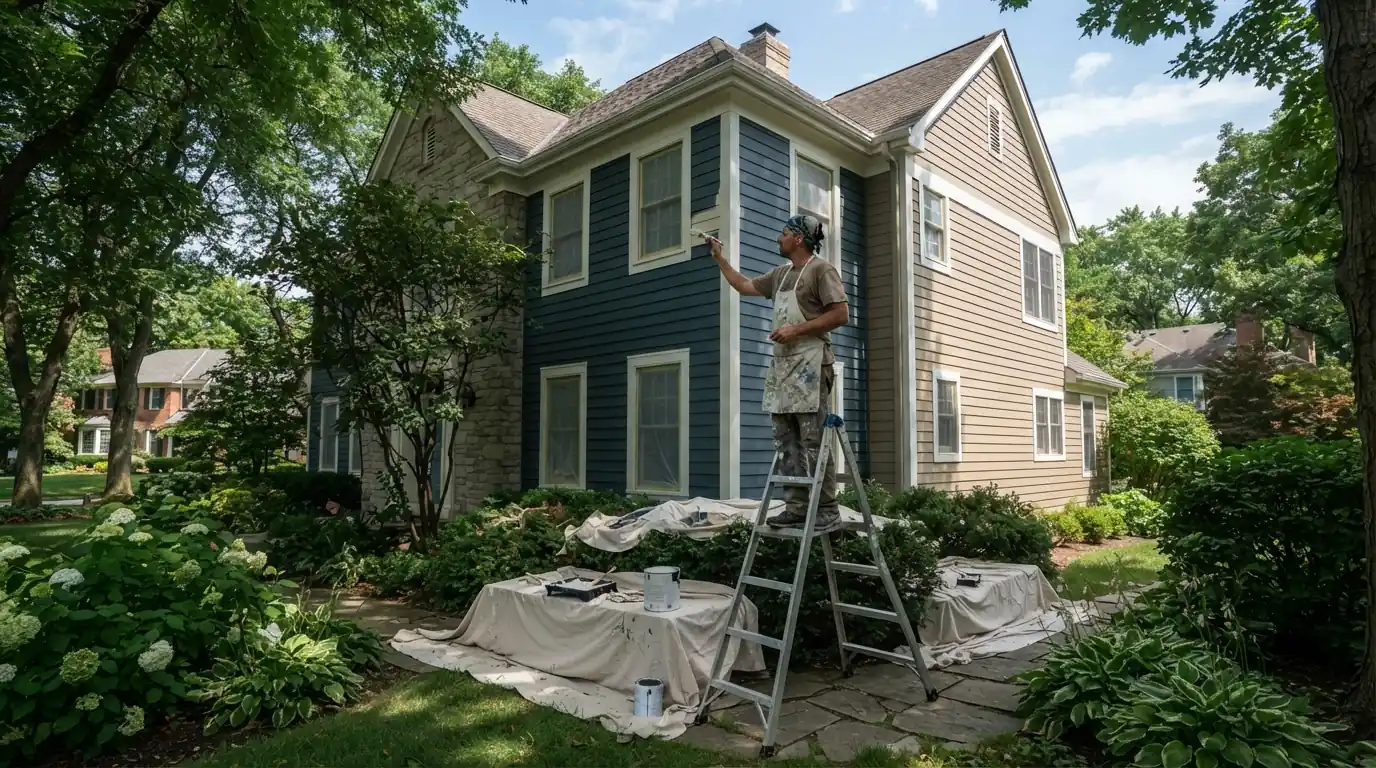
July brings average highs around 83F and the region's most humid, stormiest weather. Heat itself is manageable, but paint applied to siding in direct sun dries too fast, which leaves lap marks and weaker adhesion. Crews follow the shade around the house: west walls in the morning, east walls in the afternoon.
Summer is also the rainiest season in the Chicago area, with regular thunderstorms. A few dry hours after application are needed for most exterior paints to set, so storm days are rescheduled rather than rushed.
Want a spring start date? Call now and we will walk the house and hold a place on the calendar.
Call (630) 467-7456
Part 4
Fall is good until it is not
September and early October are often ideal: lower humidity, steady temperatures and fewer storms. By October the average high has fallen to 63F, and November drops to 49F, so days get short and nights get cold quickly.
Fall jobs are booked with a weather window instead of a fixed date, and the last exterior coats of the year usually go on in October. Deck and fence staining follows the same rule, since stain needs warm nights to cure too.
Part 5
What winter is for
Chicago-area normals show about 102 days a year below freezing, and exterior paint does not go on then. Winter is the time for walk-throughs, estimates and color choices, and for interior work, which runs all year.
If you call in December about peeling siding, we still come out, look at the house and put the job on the spring calendar. Our exterior painting page covers what the job itself involves.
Part 6
How long the job takes once it starts
A typical two-story house takes about one to two weeks from washing to the final walk-through, depending on size, prep and how many rain days interrupt it. Crews work one side at a time, so the rest of the house stays usable and windows on the other sides can open.
You do not need to be home. The crew needs outdoor water, an outlet and access through the gates, and you should get a daily note on which side is being worked and what is next.
Late May through September usually gives the most reliable weather. Spring and fall work too, with a weather window.
Below the minimum on the paint label, commonly 35F or 50F, including overnight while the paint cures.
It needs several dry hours to set, so we do not start a coat when rain is forecast soon after.
Yes. Hot siding dries paint too fast and causes lap marks. We follow the shade around the house.
For spring and early summer dates, book in late winter or early spring.
Only in an unusually warm, dry spell with a product rated for cool weather. Usually it waits for spring.
Yes. Washing comes first, and the siding is left to dry, usually at least a day, before scraping and priming.
Answering now
Talk it through with a painter in Naperville
Call any hour. We answer questions on the phone and book a walk-through when you are ready.
