Painting guide · Naperville, IL
Painting a home in the Naperville Historic District
Own an older house downtown? Painting it well means planning around the district's guidelines, treating old paint with care and choosing colors that suit the house.
We answer 24/7 and book walk-throughs on the first call.
By Douglas Woodruff, Painting Guides Editor · Updated September 2026
Guide
Painting a historic home
By Douglas Woodruff · September 2026
Short answer
Painting a home in the Naperville Historic District means planning around the city's design guidelines, which require exterior improvements in the local district to be compatible in scale, style and exterior features, and treating paint on houses built before 1978 as possibly lead-based. The district covers 613 buildings and became a local historic district in 1986.
Part 1
What the district is
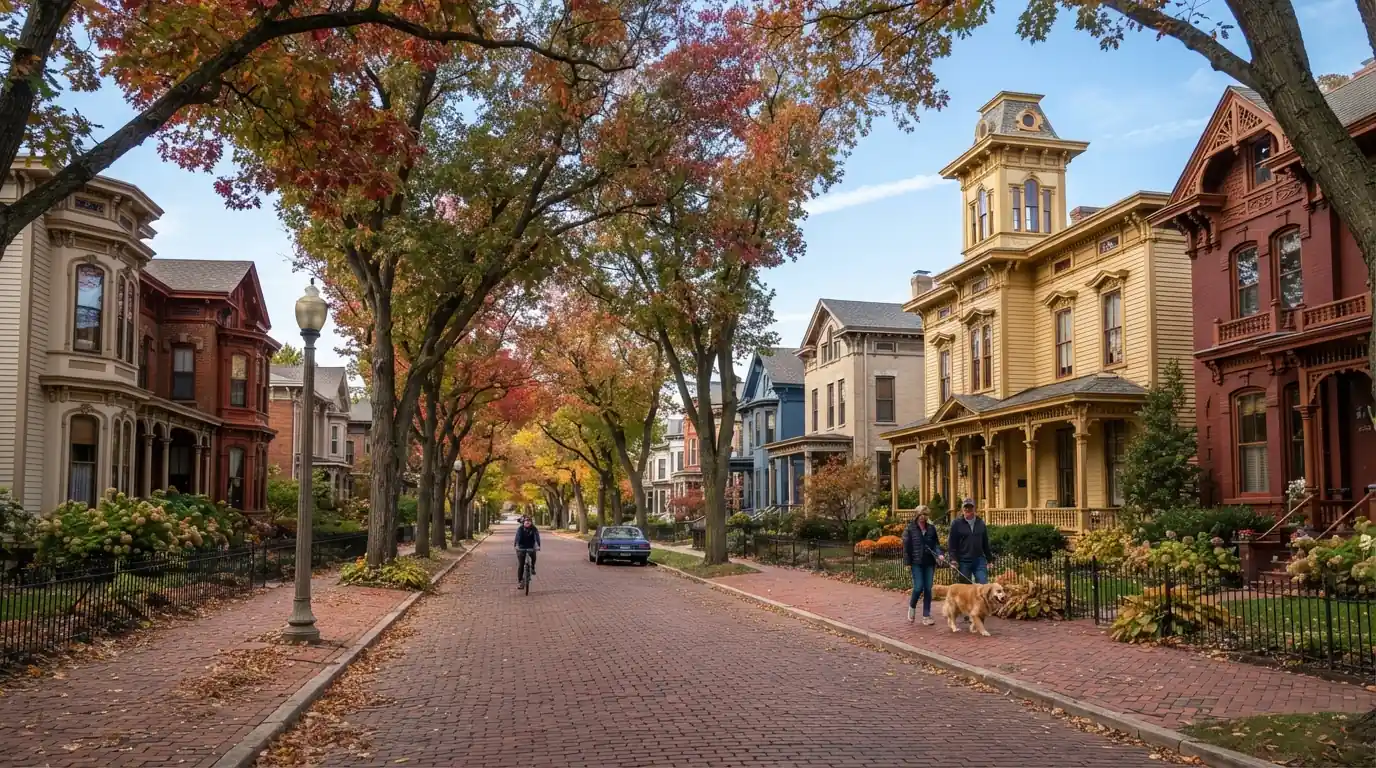
The Naperville Historic District covers 613 buildings platted from the town's founding, in Greek Revival, Italianate and Prairie styles. It was added to the National Register of Historic Places in 1977 and made a local district in 1986, which is what brings the city's preservation program and design guidelines into play.
Streets in the old town core such as Ellsworth Street, North Avenue and 4th Avenue have median build years in the 1910s and 1920s, and homes on Center Street, Sleight Street and Loomis Street date to 1890 to 1900.
Part 2
What the guidelines mean for a paint job
Under the city's historic preservation program, rehabilitations, renovations and exterior improvements inside the local district must be compatible in scale, style and exterior features. For painting, that mostly affects big changes: covering original materials, painting masonry that has never been painted, or altering visible details.
Before a major change to a house in the district, check with the city's preservation staff. A like-for-like repaint that keeps the original details is a very different conversation from one that changes the character of the facade.
Part 3
Lead paint and older houses
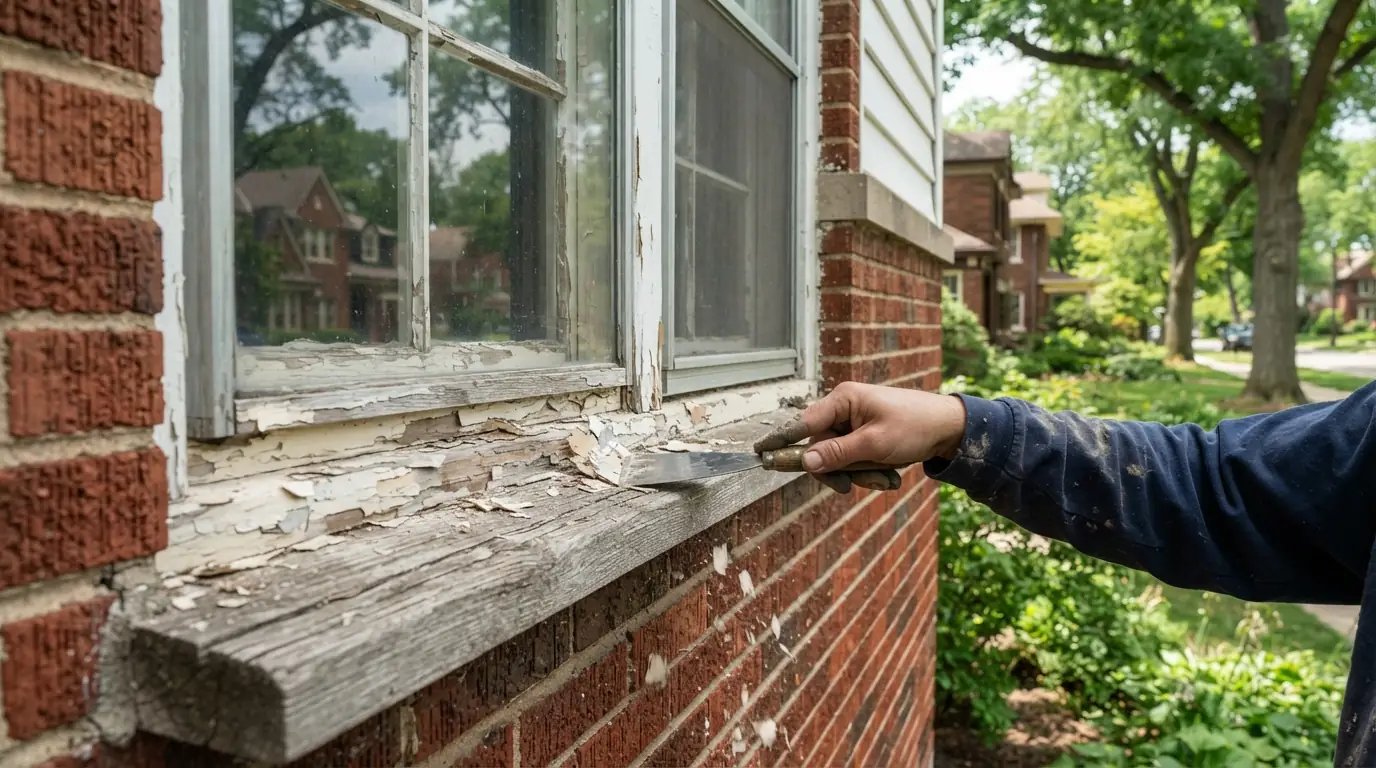
Any house built before 1978 may have lead in its older paint layers, and most of the district's houses are far older than that. The EPA's Renovation, Repair and Painting rule requires firms that disturb painted surfaces in those homes to be certified and use lead-safe work practices; homeowners working on their own home are exempt.
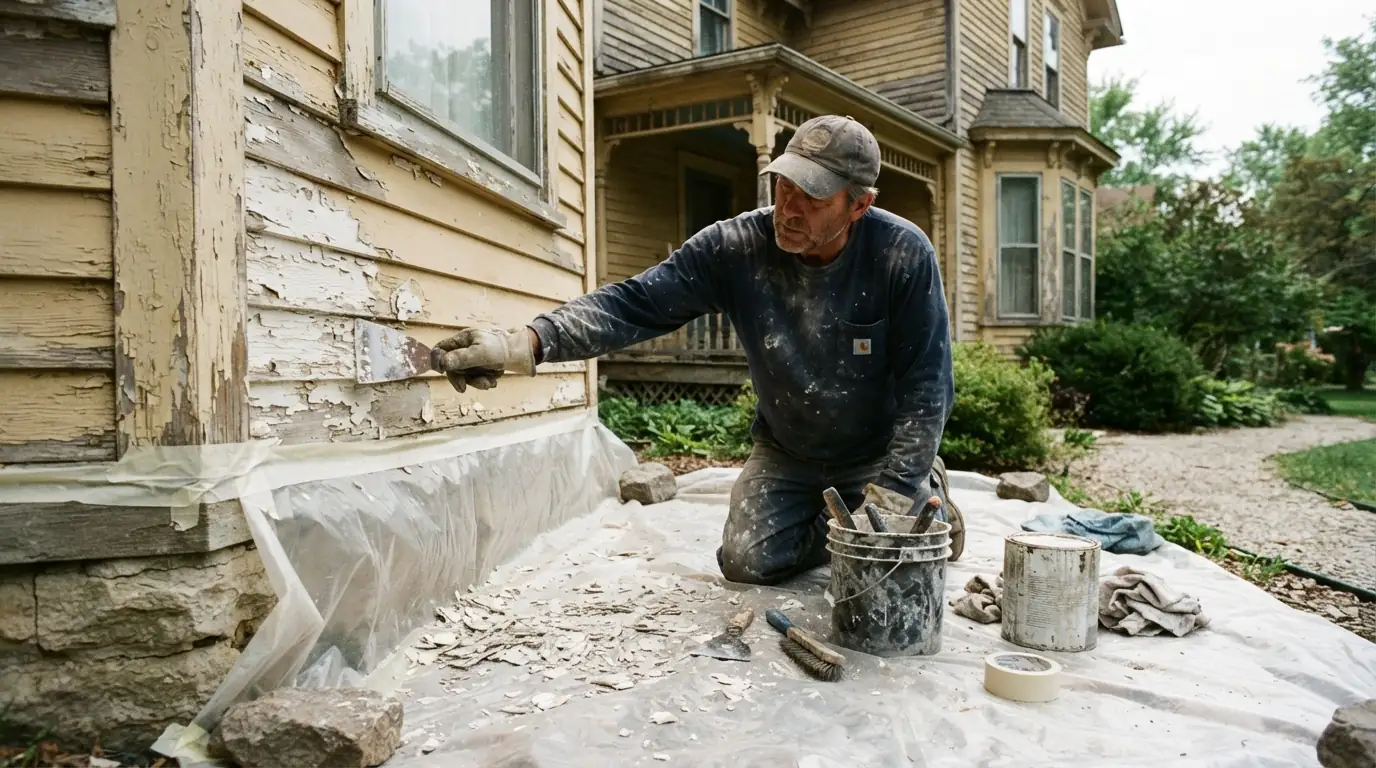
In practice that means ground covers, containment, careful scraping, no dry power sanding or open-flame burning, and daily cleanup of chips. It adds time, and it is not a step to skip on a house where children live or visit.
Planning work on an older home downtown? Call and we will walk the house with you before anything is scraped.
Call (630) 467-7456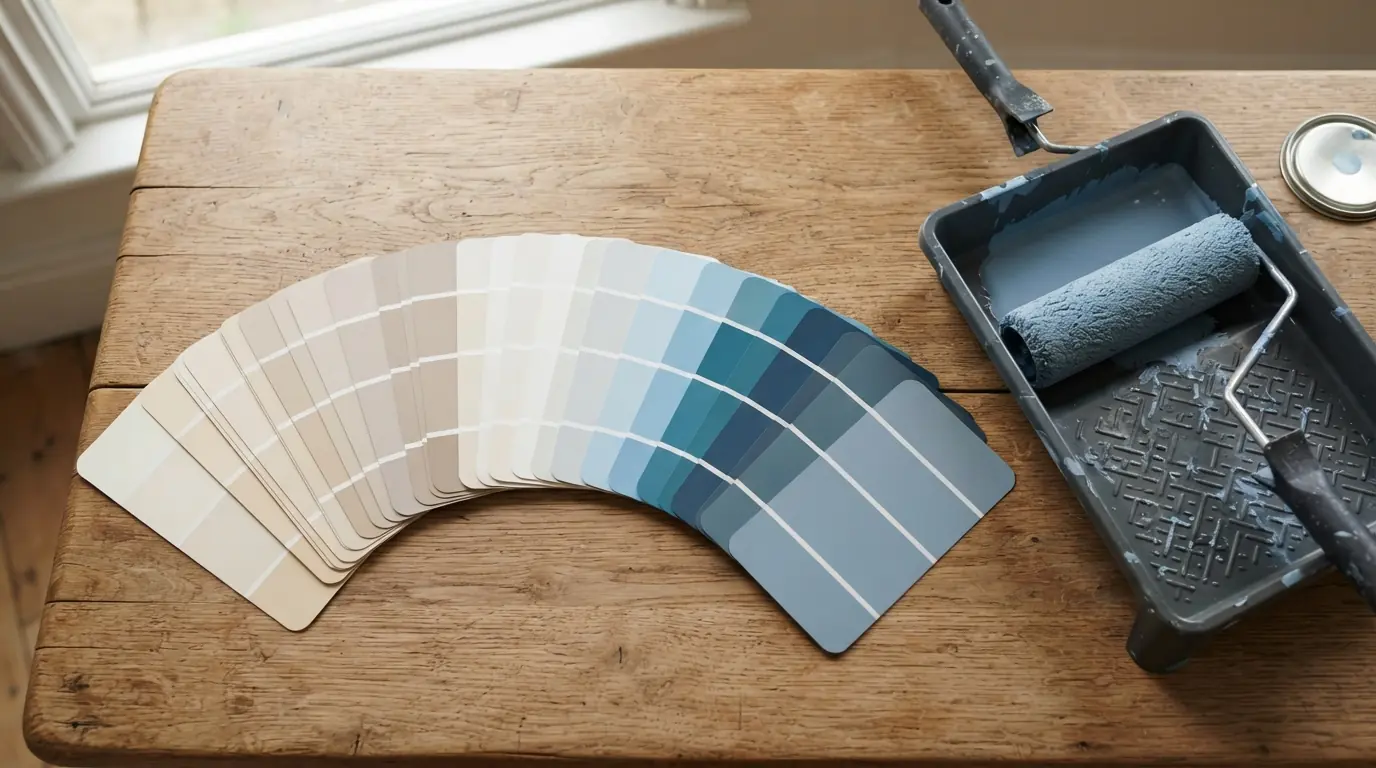
Part 4
Prep on old wood
Old-growth siding, trim and porch parts are often sounder than they look once loose paint comes off. Hand scraping to a firm edge, epoxy consolidation of soft spots and milled replacements only where wood is beyond saving keep the original material in place. Our historic home painting page covers the full scope.
Rot tends to hide at sills, porch column bases and the bottom of door casings, so those get probed before the paint plan is final. Larger repairs are covered on the wood repair page.
Part 5
Choosing colors that suit the house
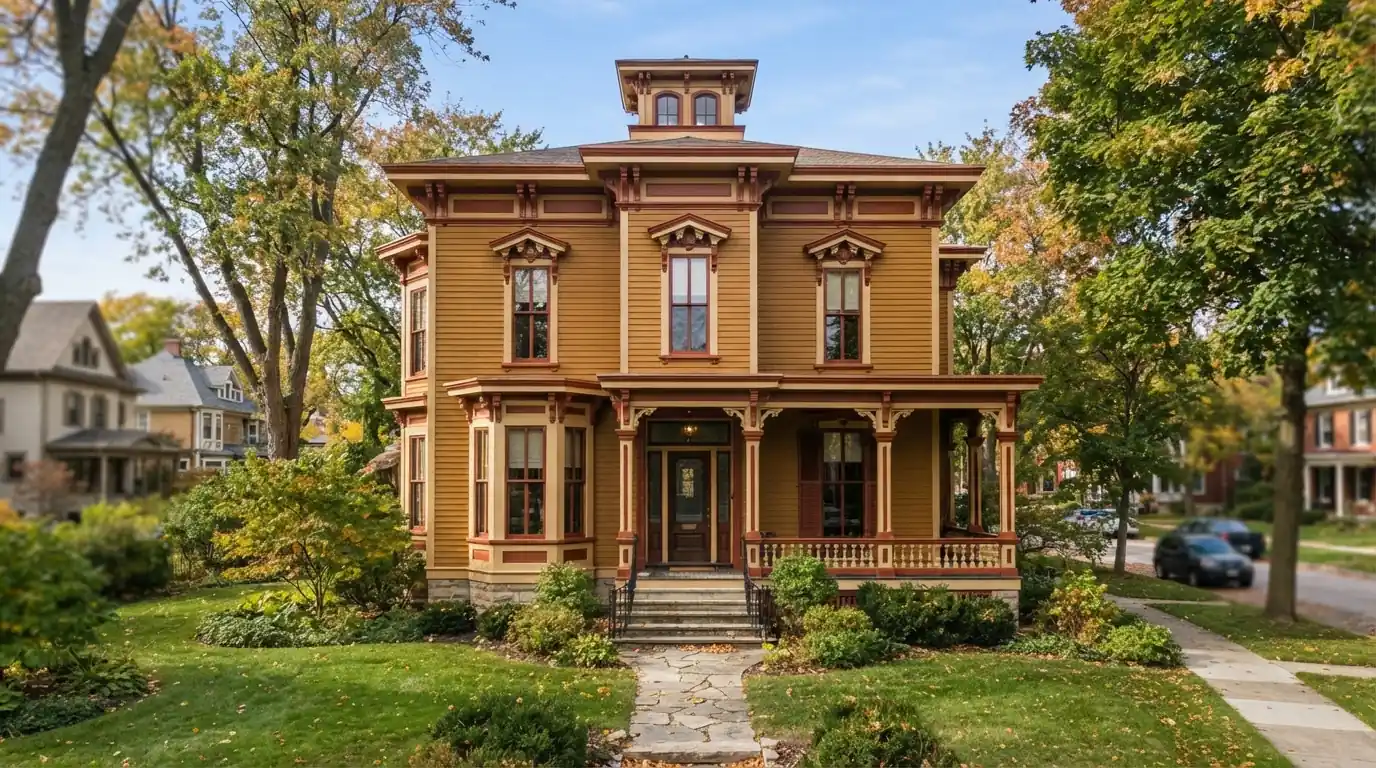
Period styles have their own color logic. Greek Revival houses were often painted in light body colors with white trim. Italianate houses commonly used warmer, earthier body colors with contrasting trim and accent colors on brackets and window heads. Prairie-style homes lean toward muted, natural tones that suit their horizontal lines.
None of that is a rule, but a scheme that fits the style usually looks right from the street. A color consultation with large test patches on a sunny and a shaded wall is the safest way to choose.
Part 6
Planning the job and the season
A historic repaint takes longer than a modern house of the same size because more of the prep is done by hand, often several weeks. Exterior work here runs from late April through October, so a job that starts late in summer can run into the cooler, shorter days of fall.
Some owners split the house over two seasons, doing the worst elevations and the porch first. That spreads the cost, keeps the most exposed wood protected sooner and leaves time for window and wood repairs on the rest.
Exterior changes in the local district must be compatible under the city's guidelines. Check with the city's preservation staff before major changes.
Only a test can confirm it. In a house built before 1978, treat old paint as lead-containing until it has been tested.
Homeowners working on their own home are exempt from the EPA rule, but the dust hazard is the same.
Usually yes. Old-growth siding is often sound under the paint and can be repaired rather than replaced.
Often three to five: a body, a trim and one or two accents on details.
Inside the district it deserves a check first, and anywhere it is hard to reverse.
Yes. More of the prep is done by hand, often over several weeks.
Answering now
Talk it through with a painter in Naperville
Call any hour. We answer questions on the phone and book a walk-through when you are ready.
