Cabinets & Prep in Naperville, IL
Skim coating in Naperville: textured and worn walls made smooth for paint
Orange-peel texture you are tired of, or walls so patched they never look even? A skim coat resurfaces the whole wall so the paint on top looks flat and clean.
We answer 24/7 and book walk-throughs on the first call.
Answering 24/7Naperville service office
Updated September 2026
This job
Skim Coating & Wall Smoothing
Cabinets & Prep · answering 24/7
Quick answer
Skim coating in Naperville, IL means spreading thin coats of joint compound over an entire wall or ceiling, usually two or three, then sanding flat and priming, so textured, patched or worn surfaces paint like new drywall. It is the step that makes dark colors and higher sheens look even.
The job
Paint shows the wall under it
Texture, old patches, tape lines and years of repairs all read through a new coat, especially in side light from big windows or under a satin finish.
Skim coating resurfaces the whole wall instead of patching spots. After repairs, thin coats of compound go on with a wide trowel, each dried and sanded, then the wall is primed so the paint sits on a uniform surface.
What moves the price
What moves the price of skim coating
Skim coating is priced by area and by how rough the wall is to begin with.
- 01Wall and ceiling area
Square footage sets compound, labor and sanding time.
- 02Texture depth
Heavy texture needs knocking down and more coats.
- 03Number of coats
Two coats suit most walls; very rough ones need three.
- 04Repairs first
Cracks, loose tape and damaged plaster are fixed first.
- 05Dust control
Occupied rooms need extra containment and cleanup.
- 06Paint after
Primer and paint are usually quoted with the skim coat.
What this job covers
A
Smoothing textured walls
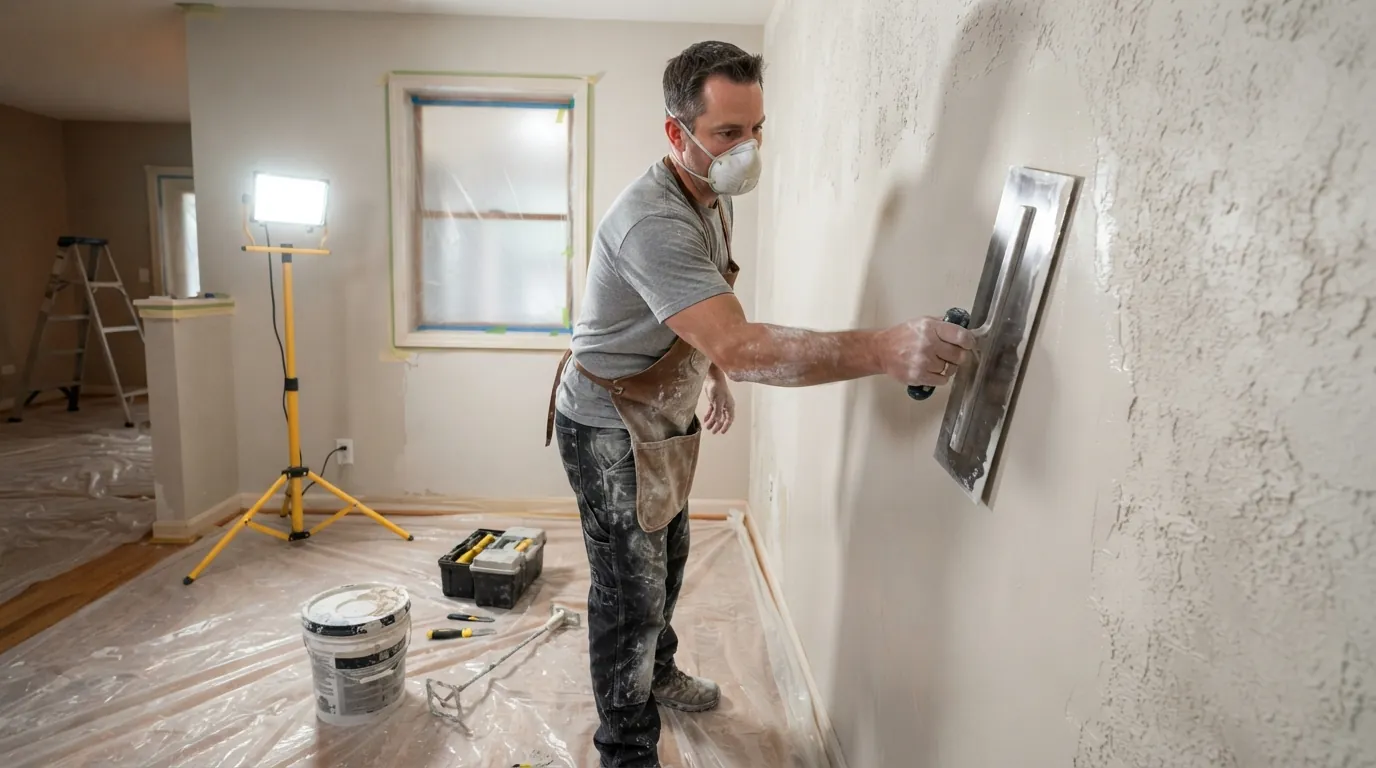
Orange-peel, knockdown and swirl textures were popular for years, and many owners now want smooth walls. We knock down the high points, prime the texture so the compound bonds, then apply two or three thin skim coats across the whole wall, feathering each one out. Between coats the wall dries and is sanded under a work light, so ridges and trowel marks are caught before paint. The result reads like new, smooth drywall once it is primed and painted.
B
Level 5 finish before paint
Level 5 is the drywall trade's term for a skim coat over the entire surface, the highest standard of finish. It matters under critical light, such as long walls beside big windows, ceilings lit from the side and walls getting dark colors or higher sheens. Without it, the difference between taped seams and plain drywall paper can show as flashing through the paint. We apply it to new or existing drywall and prime the whole surface before the paint goes on.
C
Resurfacing worn plaster walls
Older plaster walls collect decades of patches, hairline cracks and paint layers until they never look even. After loose areas are reattached and cracks taped, a skim coat of setting compound over the whole wall evens out the surface without tearing the plaster out. It keeps the solid feel of plaster, costs far less than replacing it, and gives paint a uniform surface. Any area that sounds hollow when tapped is secured with plaster washers or adhesive before the skim coat goes on.
Around Naperville
Naperville had only 3,449 residents in 1910 and saw its first big population boom in the 1950s, so the city holds everything from plaster-walled older houses to decades of drywall homes finished with the popular textures of their day. Plaster walls tend to need resurfacing after years of patching, and textured drywall is the most common reason people call us for a skim coat. Both get the same approach: repairs first, then full thin coats and a primer.
How the job runs
How a skim coating job runs
- Step 1
Assess
We check texture, cracks, loose tape and plaster and agree on the finish.
- Step 2
Protect and contain
Floors, furniture and doorways are covered and sealed.
- Step 3
Repair
Cracks, loose tape and hollow plaster are fixed.
- Step 4
Skim coats
Two or three thin coats cover the whole surface, dried between.
- Step 5
Sand and inspect
Each coat is sanded and checked under a work light.
- Step 6
Prime and paint
The wall is primed, then painted.
Compare the options
Skim coating yourself, or having us do it
Skim coating looks simple and is hard to do flat. These are the usual problems.
| Item | Doing it yourself | Having us do it |
|---|---|---|
| Flatness | Thick coats leave ridges and waves | Thin coats, feathered and sanded between |
| Dust | Sanding a whole room spreads dust everywhere | Containment and dust-controlled sanding |
| Adhesion | Compound over glossy paint or texture can flake | Surface primed or scuffed before the first coat |
| Light | Flaws show only after painting | Checked under a work light before primer |
Timing
How long skim coating takes
A typical room takes two to four days, because each coat of compound has to dry before it is sanded and the next goes on. Setting-type compounds shorten that on plaster and small areas. Primer and paint follow once the final coat is dry, so plan on the room being out of use for most of the week.
Spreading thin coats of joint compound over a whole wall or ceiling to make it smooth before paint.
Yes. The texture is knocked down, primed and skim coated until the wall is flat.
A skim coat over the entire surface, used under critical light and with dark colors.
Sanding creates dust, so rooms are contained and cleaned daily.
Yes, after loose plaster is secured and cracks are taped.
Often booked together
Other jobs that usually come up alongside this one
Answering now
Book a skim coating estimate in Naperville
Call any hour. We look at the walls, check the texture and send a written estimate.
