Exterior Painting in Naperville, IL
Exterior caulking and weatherproofing in Naperville before water gets behind the paint
Most peeling paint and rotted trim start at a cracked caulk joint. We cut out failed caulk and reseal windows, doors, trim and siding joints so water stays out.
We answer 24/7 and book walk-throughs on the first call.
Answering 24/7Naperville service office
Updated September 2026
This job
Exterior Caulking & Weatherproofing
Exterior Painting · answering 24/7
Quick answer
Exterior caulking in Naperville, IL means cutting out cracked or shrunken caulk around windows, doors, trim joints and siding seams and resealing them with a paintable exterior sealant. It keeps water out of the walls and is best done before painting or every few years on its own.
The job
Small joints that decide how long the paint lasts
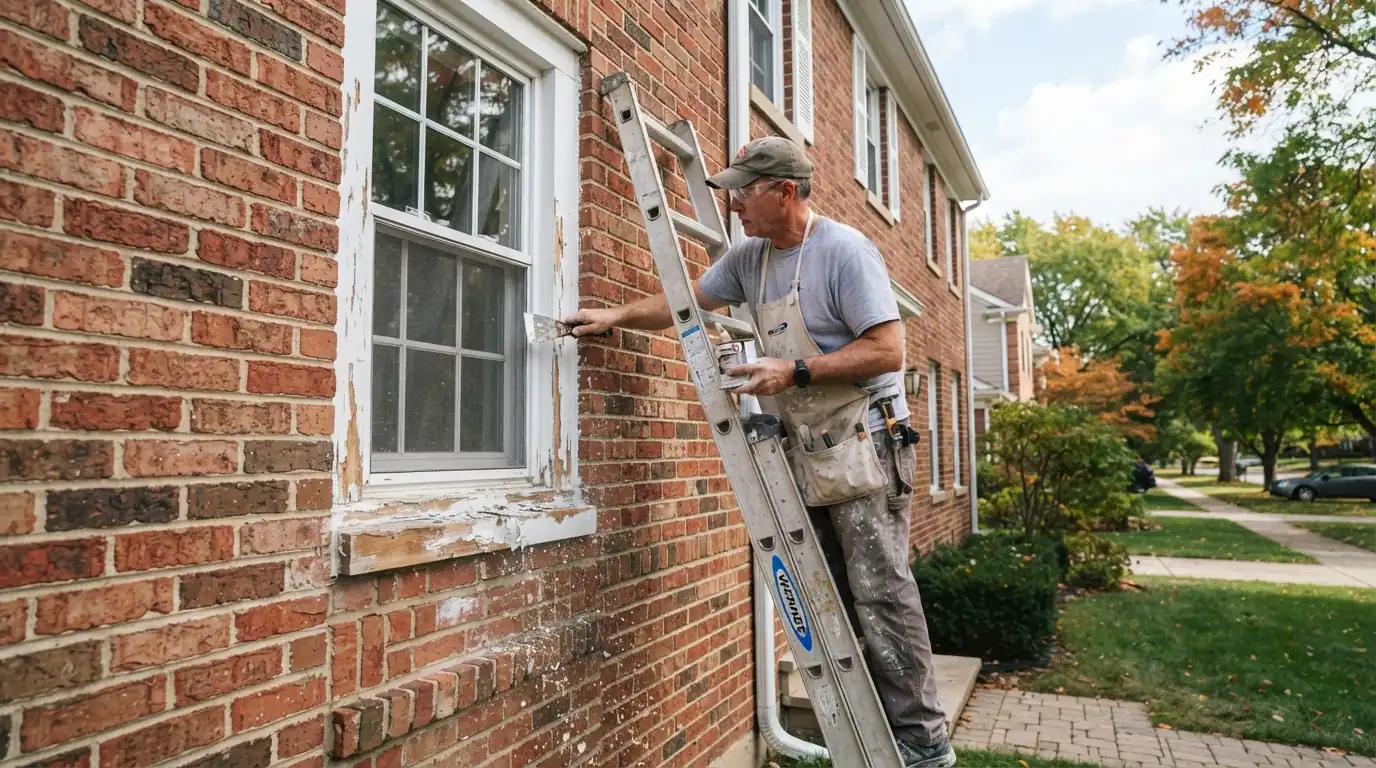
Caulk dries out, shrinks and cracks after a few years of sun, freeze and thaw. Once a joint opens, rain runs into it, soaks the wood behind the paint and starts the peeling and rot that turn a paint job into a repair job.
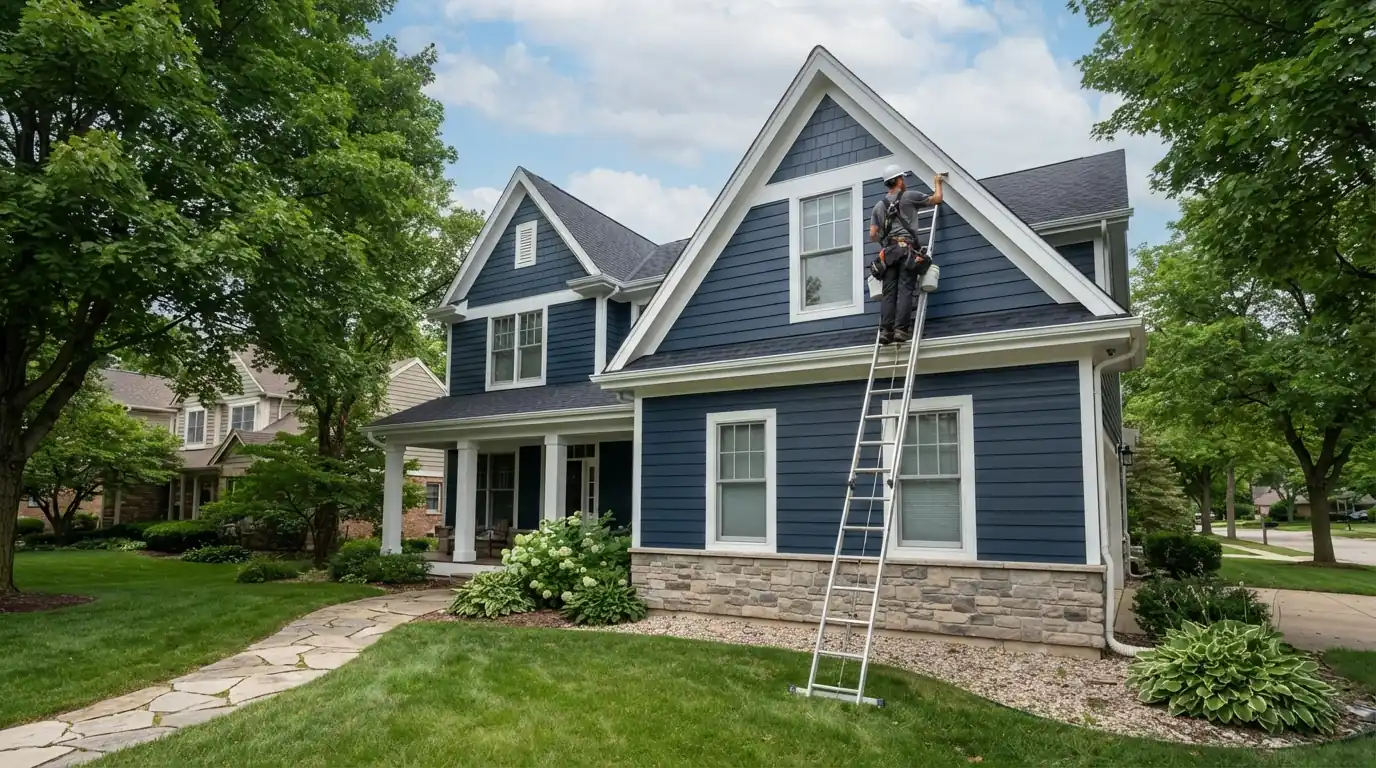
We go around the house and find every failed joint: window and door perimeters, trim seams, corner boards, siding butt joints and the gaps around vents and pipes. Failed caulk is cut out, the joint is cleaned and dried, backer rod goes into deep gaps, and a quality paintable exterior sealant is tooled smooth.
What this job covers
A
Window and door perimeter caulking
The joint between a window or door frame and the siding or trim is where most water gets in. We cut out the old caulk along the sides and head, clean the joint, and reseal it with a paintable exterior sealant tooled to shed water. At sills we leave weep paths open where the window is designed to drain. Glazing on older wood sash is a separate job, and we note it if the putty is failing. Done before a repaint, the fresh caulk is painted over so it lasts longer.
B
Siding joints and trim seams
Wood and fiber cement siding have butt joints where boards meet, and trim has seams at miters and corners. As boards move with the seasons, those joints open. We reseal the ones that need it with a flexible sealant, leaving the drip edges and overlaps that should stay open, so trapped water can still get out. On fiber cement, we follow the manufacturer's guidance on which joints are caulked and which are left open, because sealing the wrong ones can void the siding warranty.
C
Penetrations and corner boards
Every pipe, vent, light fixture and hose bib that goes through the wall is a hole in the weather barrier, and corner boards collect water where siding meets them. We reseal around penetrations and along corner boards with sealant suited to the materials, and use backer rod in deeper gaps so the bead stays the right shape. Where we find wood that is already soft, we flag it for repair before it gets painted over, since sealant will not hold on rotted wood.
What to look for
Signs your exterior caulk has failed
Cracks in the caulk
Hairline or wide cracks let water straight into the joint.
Caulk pulling away
Gaps along either edge mean the seal is gone.
Peeling paint near joints
Paint peels first where water gets behind it.
Soft wood at corners
Rot often starts at an open joint.
Drafts at windows
Air leaks usually mean the perimeter seal is open.
Stains below windows
Water marks under sills point to a failed seal.
Shrunken, hard caulk
Old caulk that has gone stiff no longer moves with the house.
Around Naperville
Freeze and thaw is hard on caulk, and older housing has more joints that have been resealed many times. In DuPage County homes built around 1978, and in the older houses near our head office in Crystal Lake, cracked caulk at windows and trim is one of the most common things we find on exterior walk-throughs, often hidden under paint that still looks fine from the street.
How the job runs
How a caulking job runs
- Step 1
Walk-around
We check every window, door, trim seam and penetration.
- Step 2
Remove
Cracked and pulling caulk is cut out of the joints.
- Step 3
Clean and dry
Joints are cleaned and allowed to dry fully.
- Step 4
Back and seal
Backer rod goes into deep gaps, then sealant is applied.
- Step 5
Tool
Each bead is tooled smooth to shed water.
- Step 6
Paint or protect
Caulk is painted with the house or left to cure.
What moves the price
What exterior caulking costs
Caulking is priced by how many joints fail and how hard they are to reach.
- 01Number of openings
Each window and door adds a perimeter to seal.
- 02Height and access
Second-story joints need ladders or lifts.
- 03Old caulk removal
Hard, cracked caulk takes time to cut out cleanly.
- 04Gap size
Deep gaps need backer rod before sealant.
- 05Siding type
Some siding has more joints than others.
- 06Paired with painting
Caulking before an exterior repaint shares setup.
Compare the options
Caulking it yourself versus having it done
A few joints are an easy weekend job; a whole house is not.
| Item | Doing it yourself | Having us do it |
|---|---|---|
| Reaching high joints | Ladder work on second-story trim | Ladders and staging set up safely |
| Old caulk removal | Often skipped, new caulk over old | Cut out and cleaned before resealing |
| Deep gaps | Filled with caulk alone | Backer rod first, then sealant |
| Product choice | Whatever is on the shelf | Paintable exterior sealant for each joint |
| Finding every joint | The obvious ones | A full walk around every opening |
Usually every five to ten years, or whenever it cracks or pulls away, and always before a full exterior repaint.
Yes. New caulk over cracked old caulk does not bond well and fails quickly.
Yes, when it is a paintable exterior sealant and has cured as the label directs.
No. Some joints are meant to drain, like window weep holes and siding overlaps, and should stay open.
Yes. Recaulking is often done on its own between repaints.
Often booked together
Other jobs that usually come up alongside this one
Answering now
Sealing up a Naperville house before winter?
Call any hour. We walk every opening and joint and send a written estimate for the caulking and any repairs.
