Decks, Fences & Wash in Naperville, IL
Fence staining and painting in Naperville, before the gray sets in
Fence gone gray, splintering or patchy? We wash, repair and stain or paint wood fences so they hold up through Naperville winters.
We answer 24/7 and book walk-throughs on the first call.
Answering 24/7Naperville service office
Updated September 2026
This job
Fence Staining & Painting
Decks, Fences & Wash · answering 24/7
Quick answer
Fence staining in Naperville, IL usually needs a fresh coat of semi-transparent stain every two to four years, applied after a wash and a dry stretch. We stain cedar and pressure-treated fences and repaint picket and rail fences, fixing loose boards first. Call any hour to book a look.
The job
Why fences need a coat more often than the house
A fence takes more weather than the house does: sun on both faces, snow piled against the bottom rail and sprinkler water every summer morning. Bare wood turns gray within a season or two, then checks and splinters. Stain slows that down by keeping water out and blocking the sun that breaks down the surface fibers.
The coating is only as good as the wood under it, so washing, drying and repairs always come first.
What is included
What a fence job includes
- A walk of the fence line and a repair count
- Plants, lawn edges and the house side covered
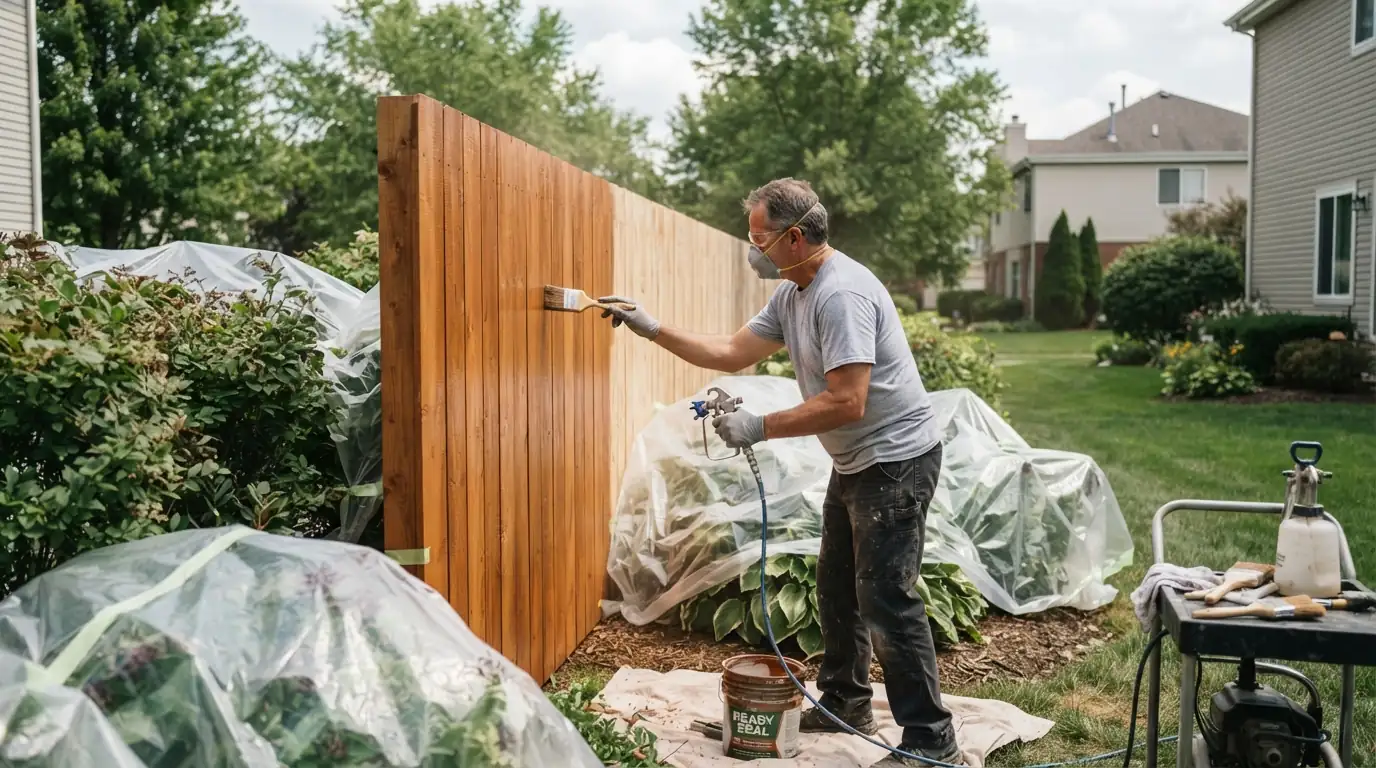
- Wash or brightener to remove gray fibers and mildew
- Dry time before any stain goes on
- Loose pickets reset and split boards replaced
- Both sides coated when we have access
- Back-brushing so stain soaks into the grain
- An overspray check on cars, siding and the next yard
What this job covers
A
Cedar privacy fences
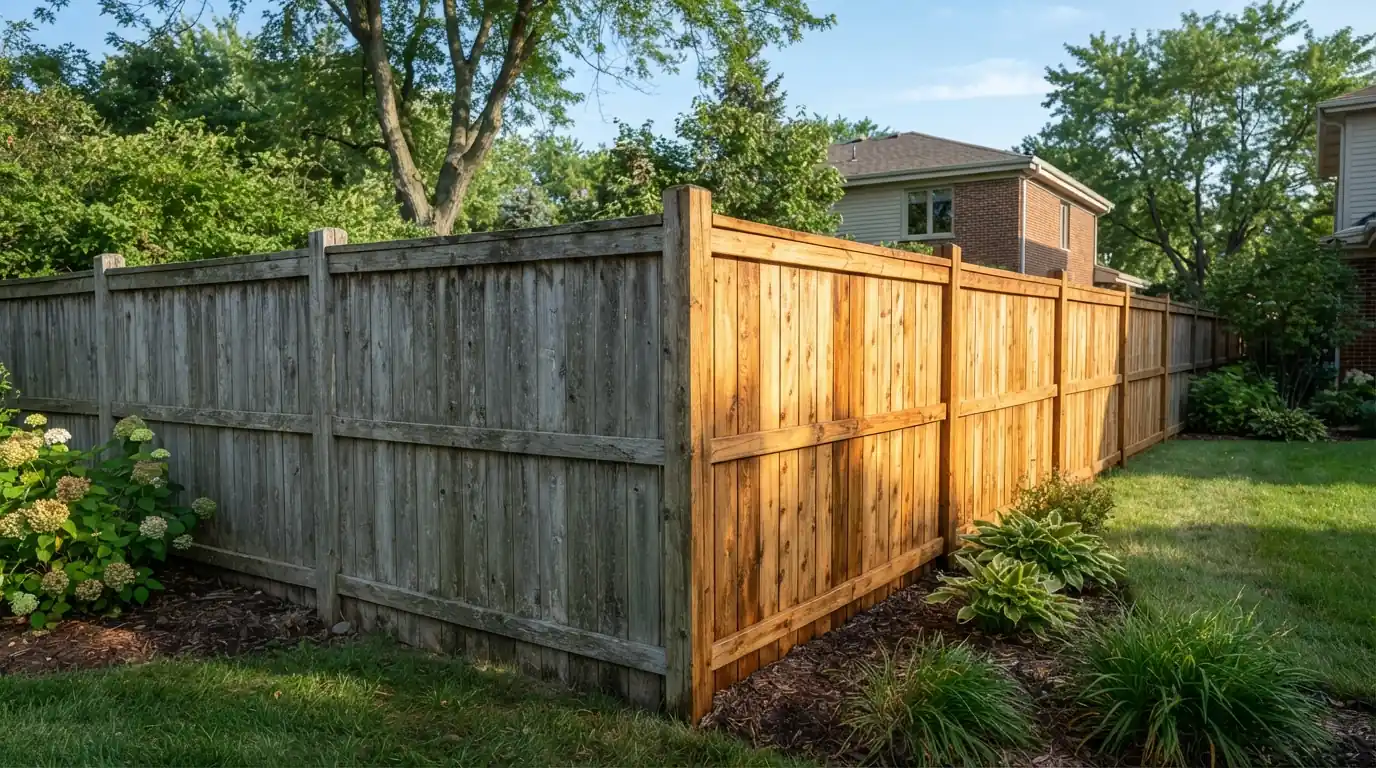
Cedar is the privacy fence we stain most, and it suits a penetrating oil or semi-transparent stain that lets the grain show. Weathered cedar gets a cleaner and brightener first, which removes the gray layer and opens the wood so the stain soaks in instead of sitting on top. Both faces are stained when we can reach the neighbor's side. When it is time to redo it, the rails and the sunny face will usually need attention first.
B
Pressure-treated fences
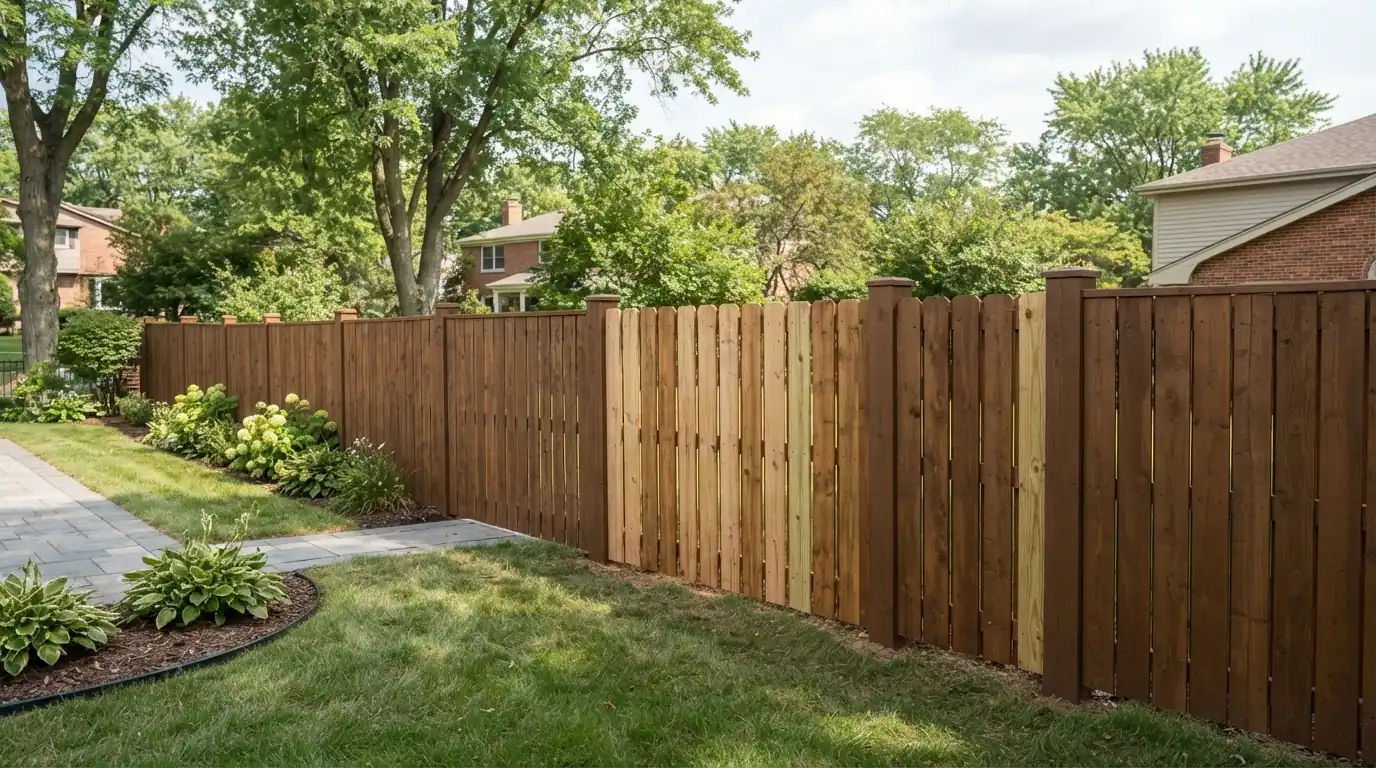
New pressure-treated lumber is wet from the treatment and has to dry out before it takes stain, often for a few months. Staining it too early traps moisture and the coating peels. Once it is ready, a semi-transparent or solid stain evens out the green tint and the mismatched boards so the run reads as one fence. Older treated fences often have cupped or cracked pickets, so we replace the worst ones and stain the new boards to match the rest.
C
Painted picket and rail fences
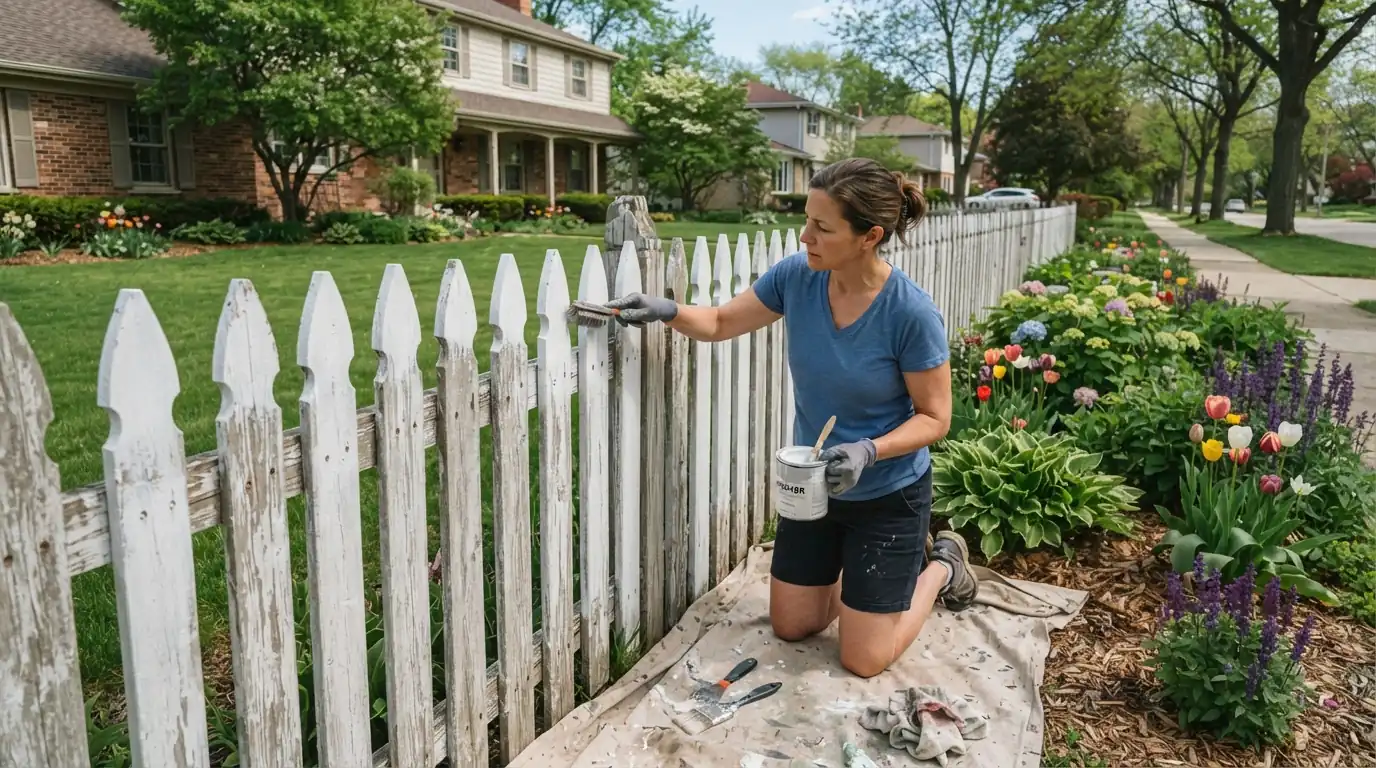
Picket and rail fences are usually painted, often white, and the paint fails first at the tops of the pickets and along the bottom rail where water sits. We scrape to a firm edge, sand, spot-prime bare wood and repaint with an exterior acrylic made for trim. Rotted picket tips, split rails and loose post caps are replaced before any paint goes on. A painted fence needs proper prep every time, because paint over peeling paint only peels again.
What to look for
Signs your fence needs stain now
Gray, fuzzy surface
Sun has broken down the top fibers, and stain will not bond until they are washed off.
Water soaks straight in
If splashed water darkens the wood at once, the old stain is gone.
Splinters and checking
Open cracks along the grain let water in and grow with every freeze.
Black or green spots
Mildew and algae on shaded runs need cleaning before any coating.
Peeling on painted pickets
Once paint lifts at the tops, water gets under the rest.
Boards cupping or twisting
Uneven wetting and drying pulls boards out of flat.
Loose pickets and posts
Fixing them before staining costs less than fixing them after.
Around Naperville
Fences here sit through about 102 days a year below freezing, going by Chicago-area climate normals, and every thaw pushes water into bare end grain and cracked pickets. That is why we coat post tops and the bottom rail with extra care. In south Naperville, on the Will County side where the subdivisions are newer, many fences are still young enough that a regular stain every few years keeps them from ever needing a strip or a full repaint.
How the job runs
How a fence job runs
- Step 1
Walk the fence line
We measure the run, note repairs and agree on stain type and color.
- Step 2
Protect the yard
Plants, lawn edges and the side of the house get covered.
- Step 3
Wash or brighten
Gray fibers, dirt and mildew are cleaned off and the wood is left to dry.
- Step 4
Repairs
Loose pickets are reset and split or rotted boards replaced.
- Step 5
Stain or paint
The coating is sprayed or brushed, then back-brushed into the grain.
- Step 6
Final check
We walk the fence with you and clean up any overspray.
What moves the price
What moves the price of fence staining
Fence work is priced by the length and height of the run and how much has to happen before the stain goes on.
- 01Length and height
Linear feet times height sets the area to coat.
- 02One side or both
Staining the neighbor's face needs access and roughly doubles the surface.
- 03Condition of the wood
Heavy graying, mildew or peeling paint adds cleaning and scraping time.
- 04Repairs
Replacing pickets, rails or post caps is added before coating.
- 05Stain type
Transparent, semi-transparent and solid stains differ in price and life span.
- 06Access and landscaping
Tight gardens, slopes and plantings slow set-up.
Fence stains we apply most often come from Cabot, Sikkens and Behr, matched to the wood and the look you want.
Benjamin Moore, Sherwin-Williams, JC Licht, Behr, PPG, Valspar, Cabot, Sikkens, Rust-Oleum, Zinsser, Purdy, Wooster
Semi-transparent stain usually every two to four years; solid stain and paint last longer but need scraping when they fail.
Stain for cedar and treated privacy fences, since it soaks in and does not peel; paint for pickets where a crisp color matters.
Once the wood has dried, often a few months after install. Water soaking in quickly is the sign it is ready.
Yes, when we have access to the neighbor's side. Otherwise we coat your side and the tops of the posts.
Late spring through early fall, after a dry stretch, when nights are warm enough for the stain to cure.
Often booked together
Other jobs that usually come up alongside this one
Exterior Wood Rot Repair
Rotted trim and sill replacement
See the jobDeck Staining & Sealing
Transparent and semi-transparent stain
See the jobWrought Iron & Metal Railing Painting
Wrought iron railings
See the jobPressure Washing
House and siding wash
See the jobPorch Floor & Patio Coatings
Wood porch floor paint
See the jobAnswering now
Book a fence staining estimate in Naperville
Call any hour. We walk the fence line, count the repairs and send a written estimate with the stain and color listed.
