Painting guide · Naperville, IL
Painting oak trim and cabinets white: what it takes in a Naperville home
Tired of orange oak but worried white paint will turn yellow or peel? It can be done well, and almost all of the difference is in the prep and the primer.
We answer 24/7 and book walk-throughs on the first call.
By Douglas Woodruff, Painting Guides Editor · Updated September 2026
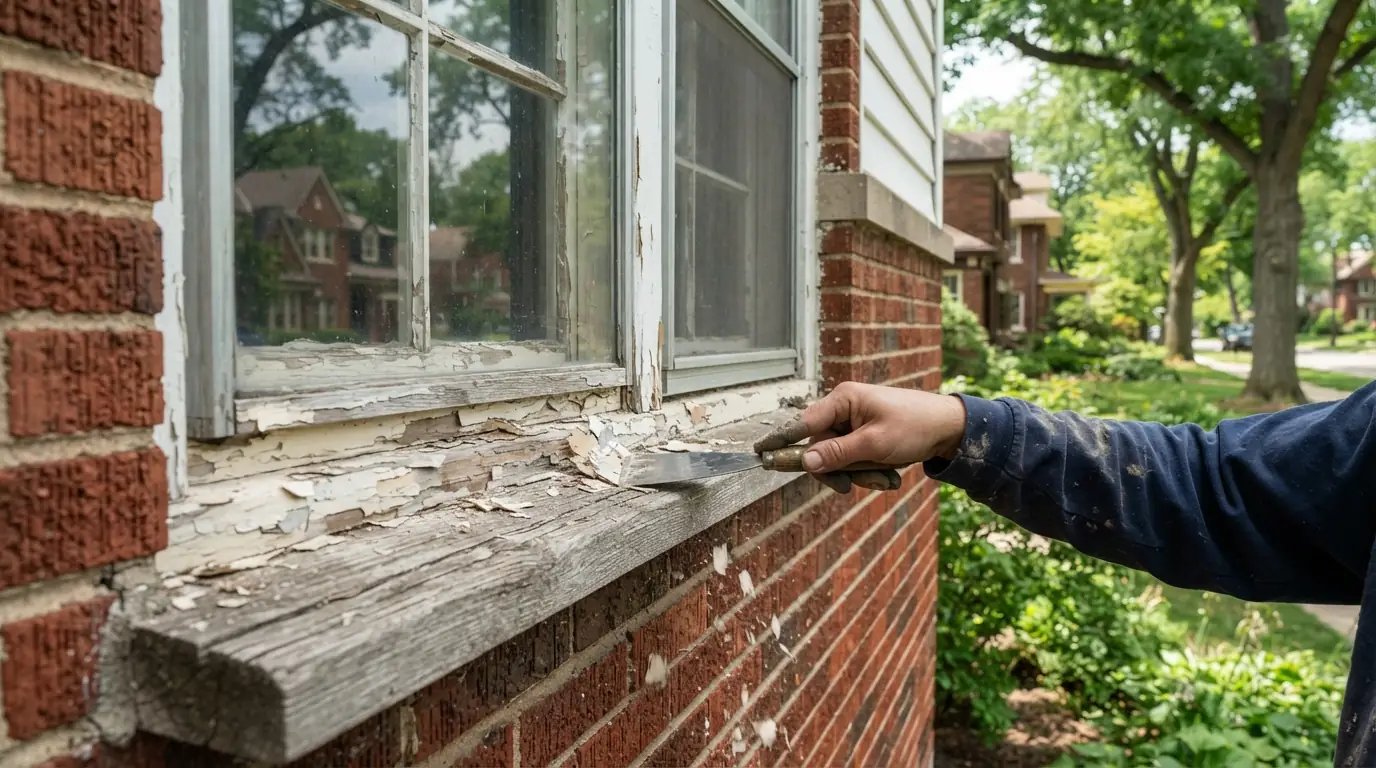
Guide
Oak trim and cabinets to white
By Douglas Woodruff · September 2026
Short answer
Painting oak trim or cabinets white in Naperville, IL takes a thorough clean, a light sand, a stain-blocking or bonding primer and two coats of a hard enamel. The primer is the critical step, because oak tannin bleeds yellow through white paint. Published HomeAdvisor data puts cabinet painting in Naperville at $406 to $1,182 for a typical job.
Part 1
Why so many Naperville homes have orange oak
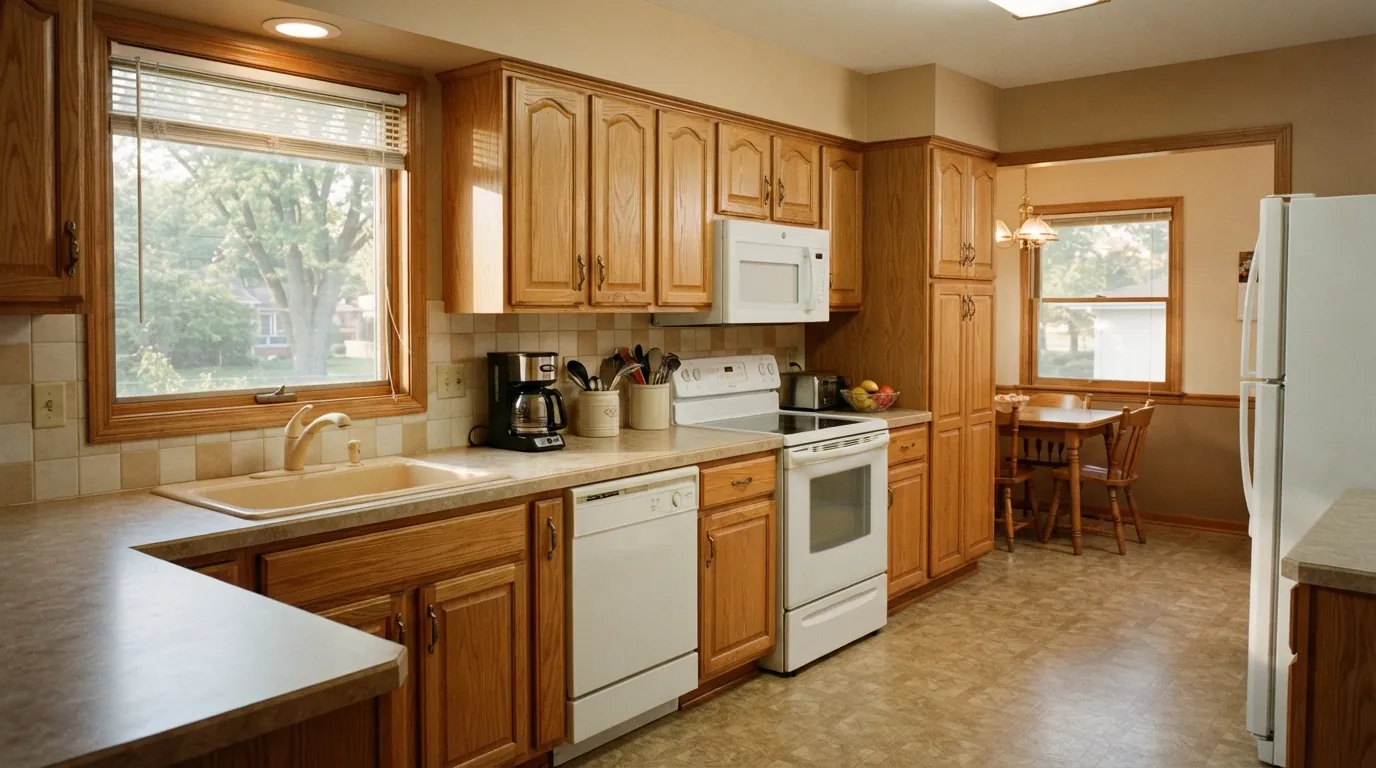
The median Naperville home was built in 1984, and subdivision streets like Rockbridge Drive, Rolling Grove Court and Villanova Drive carry median build years of 1983 to 1985. Homes of that era were commonly finished with honey oak trim, doors, stair parts and cabinets under a clear coat.
That clear coat ambers with age, which is why the wood now reads orange. The oak underneath is usually solid and worth keeping, which makes paint a sensible way to update it without replacing anything.
Part 2
Why oak fights white paint
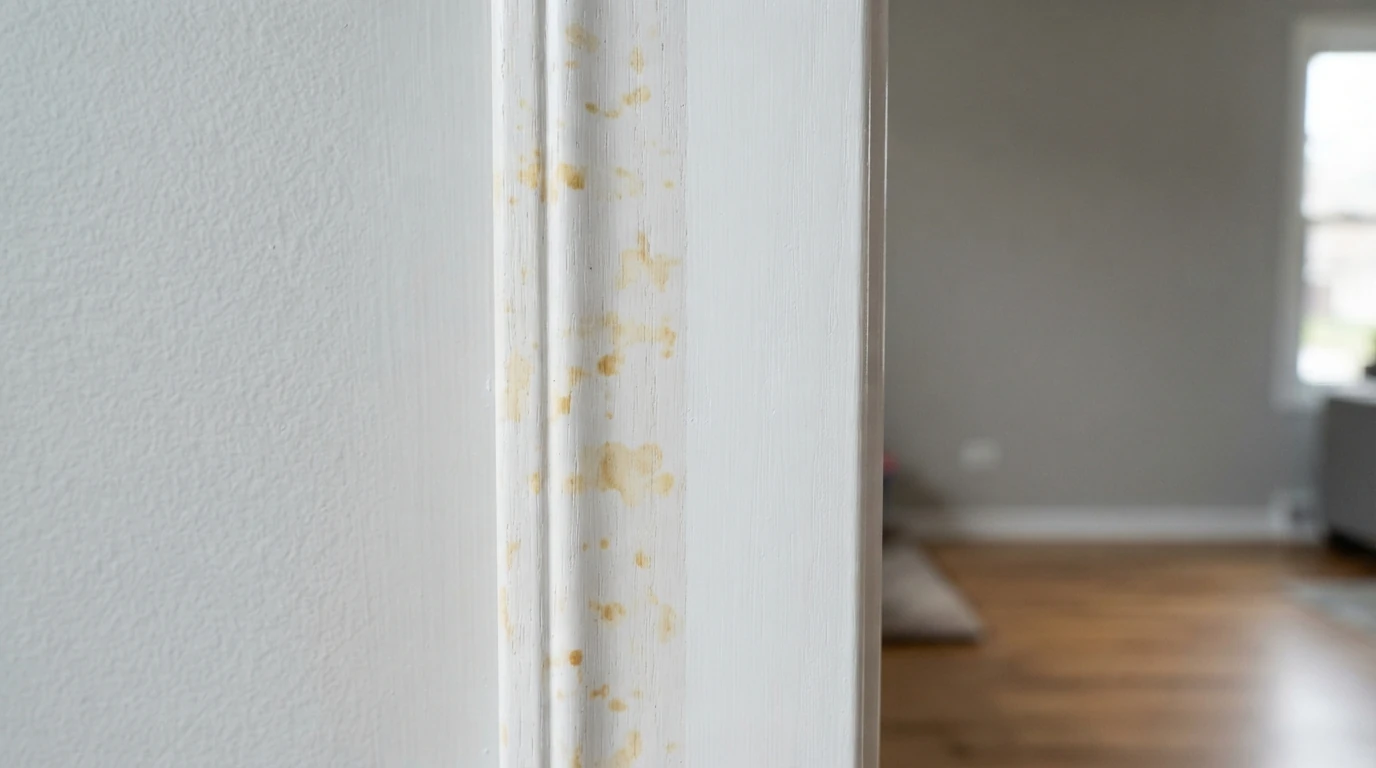
Oak causes three problems for white paint. It contains tannins that migrate into water-based paint and show as yellow or brown spots, sometimes weeks later. It has open grain that telegraphs through a thin coat. And its factory or site finish is slick, so paint laid straight on top can scratch off with a fingernail.
Most failed oak-to-white jobs skipped one of those: no stain-blocking primer, no sanding or no degreasing. Kitchen cabinets add grease near the range, which is the most common reason painted cabinets peel at the handles.
Part 3
Fill the grain, or let it show
Some homeowners like the texture of oak grain under paint; others want a smooth, modern finish. For a smooth look, a grain filler is applied and sanded back before primer, which adds a step to every door and every run of trim.
Leaving the grain visible is quicker and still looks clean, especially on trim. On cabinets, it is worth painting one sample door both ways before deciding.
Want to see your oak in white first? Call and we will prime and paint a sample so you can decide.
Call (630) 467-7456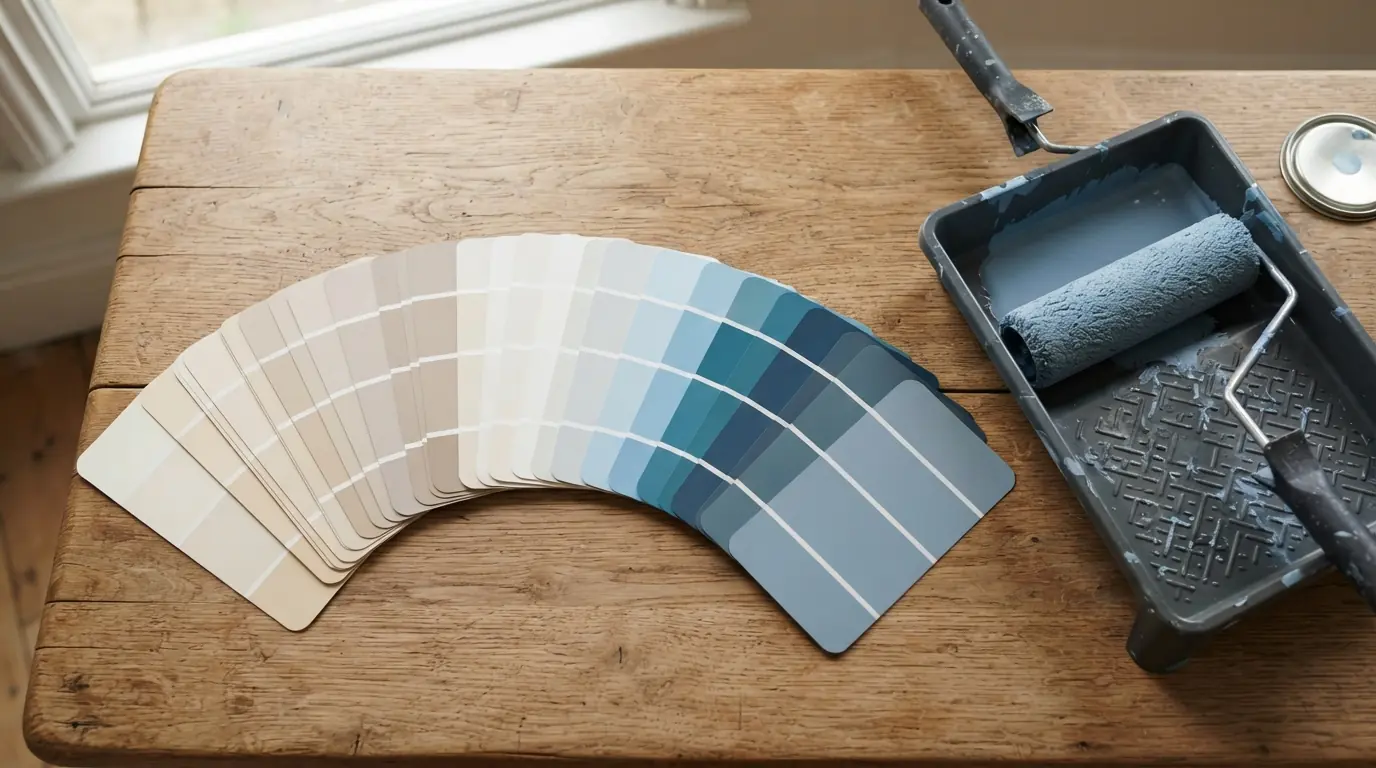
Part 4
Primer does most of the work
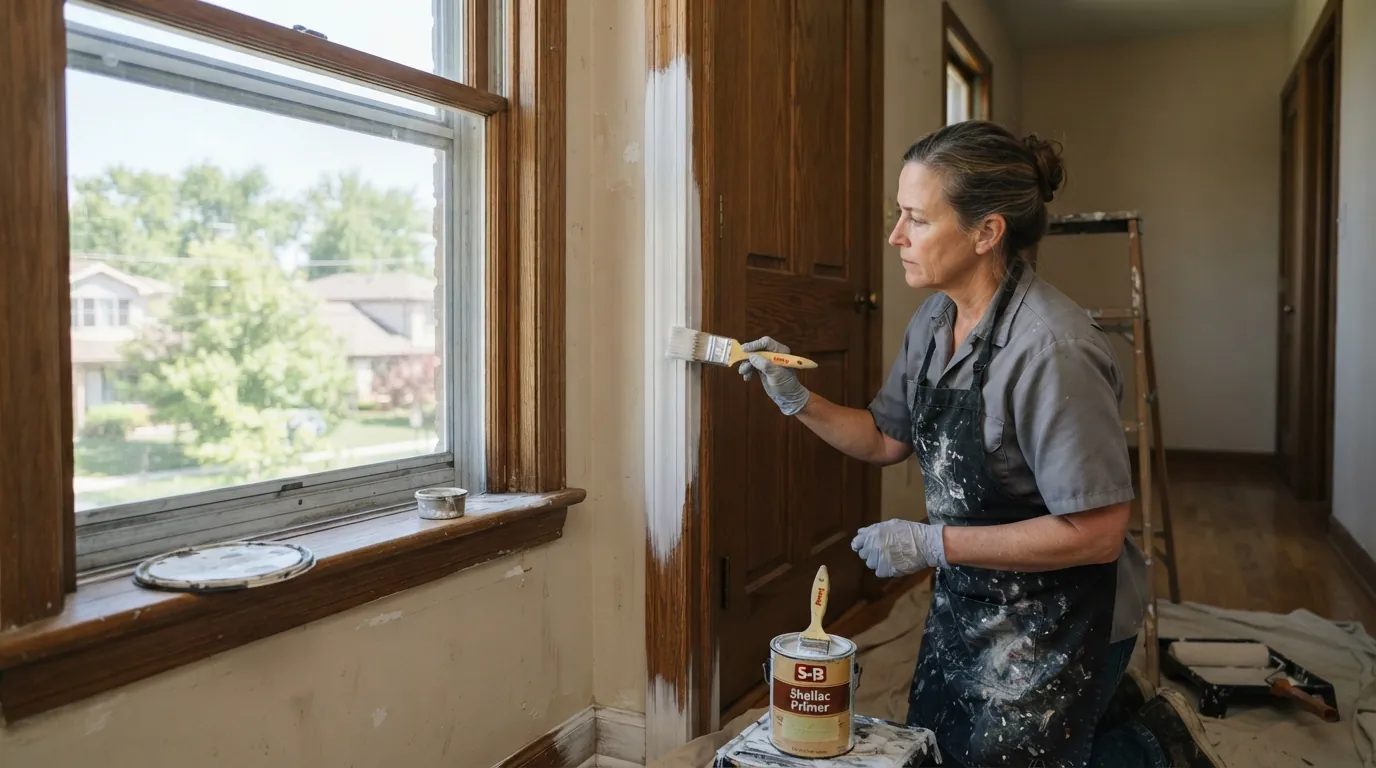
A shellac-based or oil-based stain-blocking primer locks the tannin in and gives the enamel something to grip. On cabinets, a bonding primer made for slick surfaces goes on after degreasing and a scuff sand. If any spots still show through the first primer coat, they are spot-primed again before the enamel.
This is also the step that matters for oak stair spindles and rails, which get handled constantly.
Part 5
Enamel and sheen for trim and cabinets
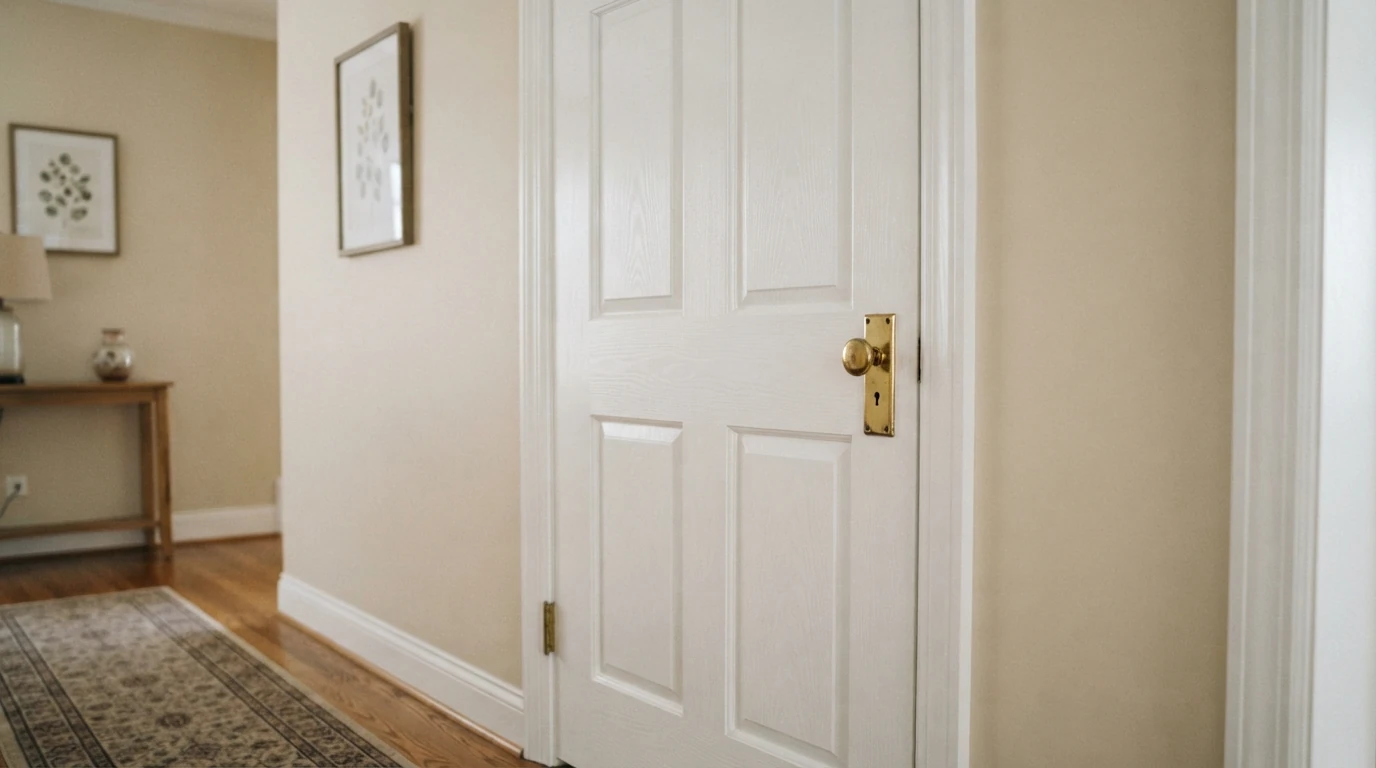
Trim and cabinets get a hard enamel, not wall paint. Waterborne alkyd enamels level out smoothly with low odor, and they resist yellowing far better than old oil enamels. Semi-gloss is easiest to clean; satin hides dents better. Our trim painting page compares the options.
Cabinet doors are best sprayed flat after being removed and labeled, which is how cabinet painting avoids brush marks. Enamel dries in hours but hardens over a couple of weeks, so doors and drawers need gentle use at first.
Part 6
Paint, restain or leave it?
Paint is not the only option. Oak can be sanded and restained a browner, less orange tone, which keeps the grain and suits homeowners who like wood. Our wood staining page covers that route.
Some owners keep the oak and change everything around it: new wall colors that calm the orange, or white trim with stained doors and rails. A walk-through and a sample board are the fastest way to see which you prefer.
Part 7
What a good oak-to-white job looks like
Look closely a few weeks after the job is finished. There should be no yellow or brown spots coming through the white, especially on doors and around knots. The enamel should feel smooth, without brush ridges or grit, and the line where trim meets wall should be a clean caulked edge.
Doors should close without sticking to the frame, and cabinet doors should hang level with even gaps. A labeled can of touch-up enamel for each color should be left with you, because small chips are easy to fix with the exact same paint.
Related services
The jobs this guide covers
Not with a stain-blocking primer under it. Without one, oak tannin can bleed through as yellow spots.
They need cleaning, degreasing and a scuff sand, not stripping, so the bonding primer can grip.
Yes. Skip the grain filler and the texture shows through; fill it for a smooth finish.
Many years with a bonding primer and cabinet-grade enamel, though any paint can chip under a hard knock.
Usually yes. Doors, casings, baseboards and stair parts done together keep the house reading as one color.
Waterborne alkyd enamels give an oil-like finish with low odor and far less yellowing.
Yes. It can be sanded and restained a browner tone, or toned with a tinted clear coat.
Answering now
Talk it through with a painter in Naperville
Call any hour. We answer questions on the phone and book a walk-through when you are ready.
