Painting guide · Naperville, IL
How often to stain a deck or fence in Naperville
Not sure if your deck or fence needs stain this year? A two-minute test tells you, and the stain you choose decides how soon you will be doing it again.
We answer 24/7 and book walk-throughs on the first call.
By Douglas Woodruff, Painting Guides Editor · Updated September 2026

Guide
Deck and fence staining schedule
By Douglas Woodruff · September 2026
Short answer
Most decks in Naperville, IL need a fresh coat of semi-transparent stain every one to three years on the floor boards, while fences usually go two to four years, because flat boards take more sun and standing water than upright pickets. Published national price data puts typical deck staining at $300 to $1,200.
Part 1
Why decks wear faster than fences
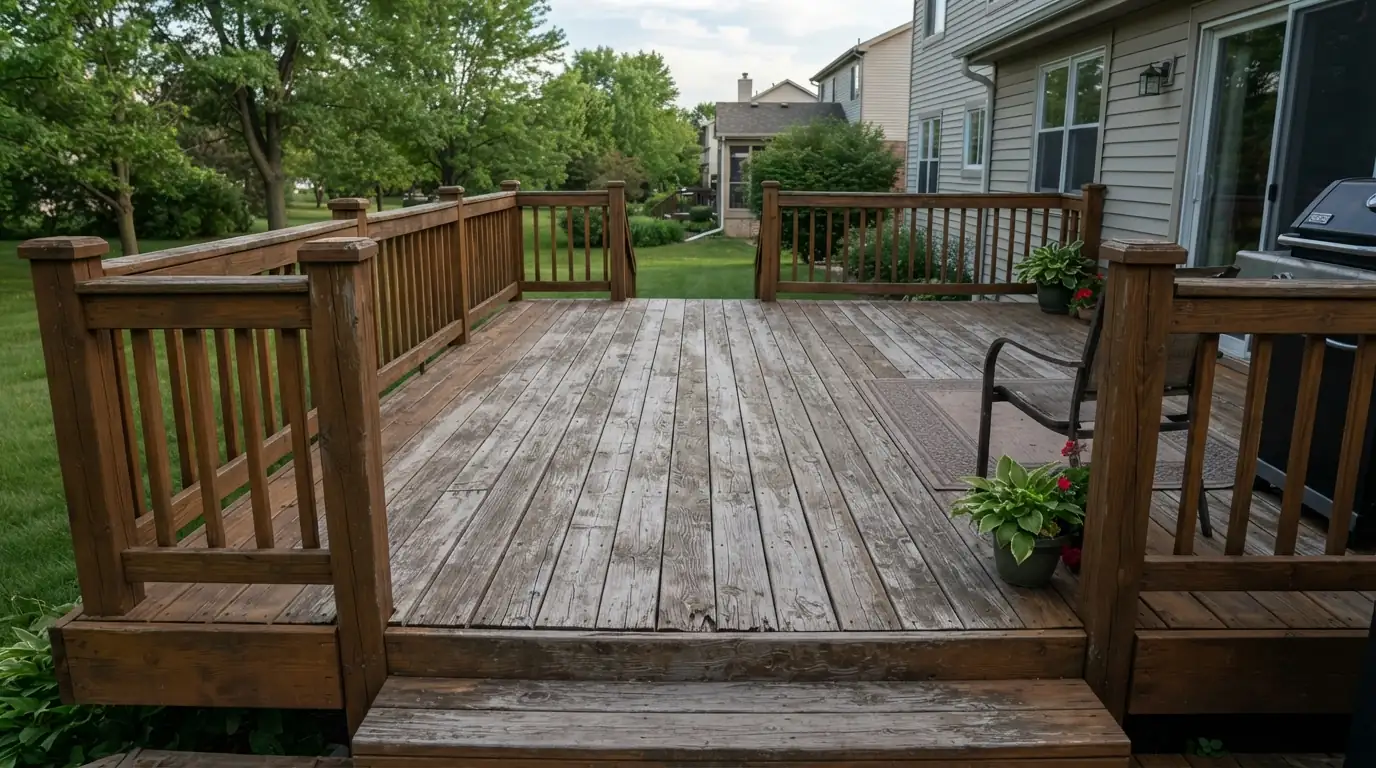
A deck floor faces the sky. Sun hits it all day, rain and snowmelt sit on it, and feet grind the finish off in the paths people walk. A fence stands upright, sheds water and gets sun mostly on one face, so the same stain lasts noticeably longer on the fence than on the deck beside it.
Rails and stair risers on a deck behave more like a fence, which is why a deck often needs its floor redone before its railings.
Part 2
The water test
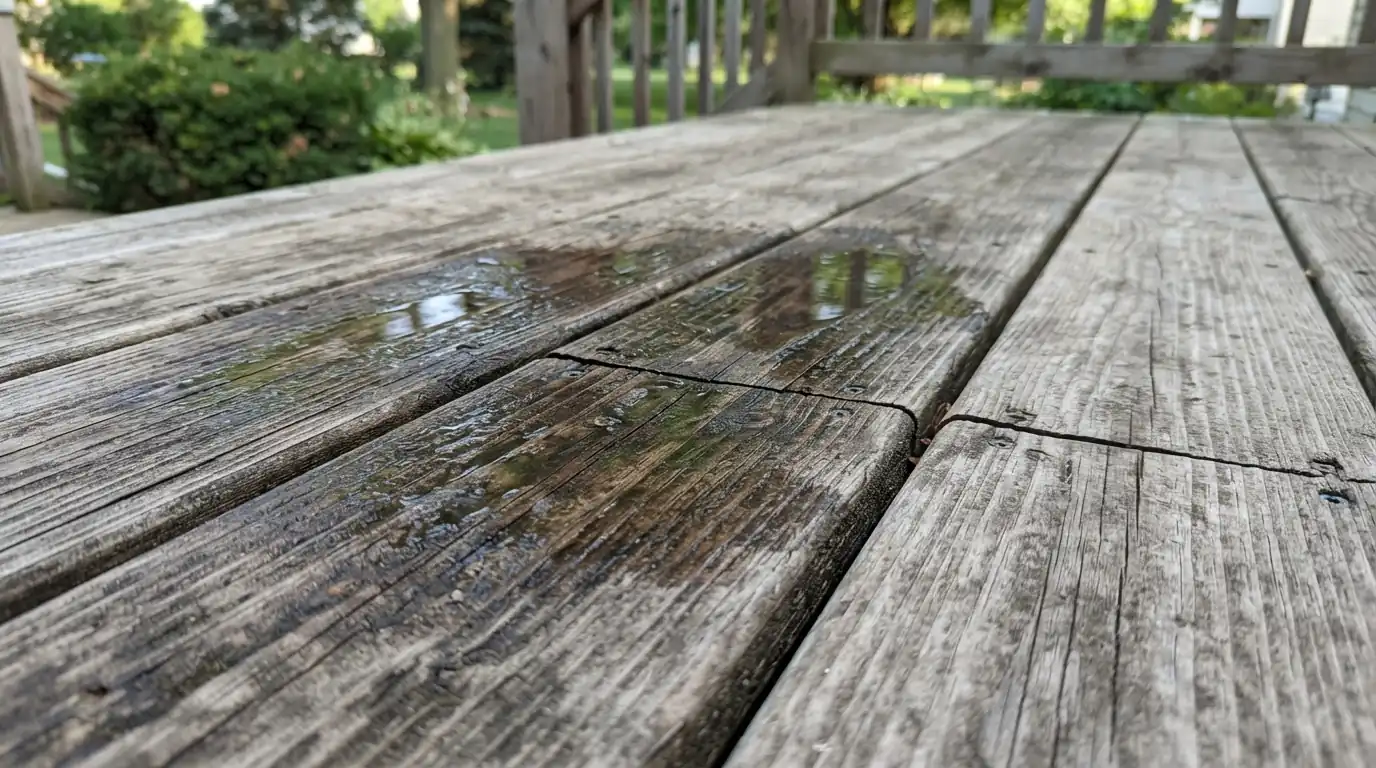
Splash a cup of water on the boards. If it beads up or sits on the surface, the stain is still working. If it darkens the wood and soaks straight in within a minute, the protection is gone and the wood is taking on water.
Other signs point the same way: gray or fuzzy wood, black mildew spots, peeling on solid stain, splinters and boards starting to cup. Any one of them means the next coat is due.
Part 3
Stain type changes the schedule
Transparent stains show the most grain and wear fastest. Semi-transparent stains hold more pigment and last longer while still showing the wood. Solid stains cover like paint and last longest on vertical surfaces, but on a deck floor they wear in traffic paths and can peel if applied too heavily. Our deck staining page compares them.
A common compromise is solid stain on the rails and a semi-transparent on the floor, so the part that wears fastest is also the easiest to recoat.
Deck or fence due this year? Call and we will check the wood and book a dry week.
Call (630) 467-7456
Part 4
What a Naperville winter does to wood
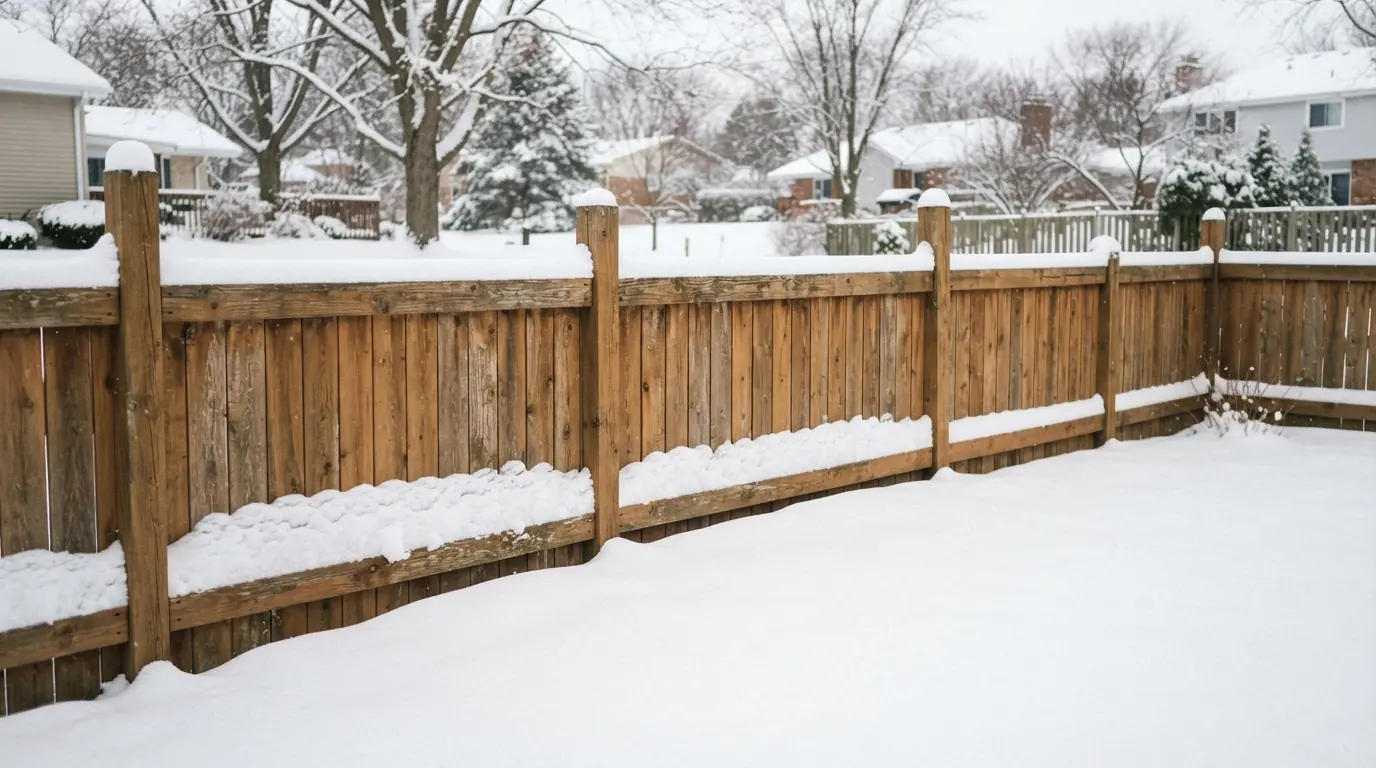
Chicago-area climate normals show about 102 days a year below freezing, and every thaw pushes water into bare end grain, cracked boards and open joints. Snow piled against the bottom of a fence or sitting on deck stairs keeps that wood wet for weeks.
That is why post tops, board ends and bottom rails get extra stain, and why soft spots found in spring should be fixed before staining. Rotted boards and posts are covered on our wood repair page.
Part 5
Timing the restain
Stain needs dry wood and warm nights. Late spring through early fall works best, after a few dry days, with no rain forecast soon after. Fall jobs can run into October, but cold nights slow the cure.
Newly built pressure-treated decks and fences need to dry out first, often for a few months, before stain will soak in. Our fence staining page covers that in more detail.
Part 6
Clean first, every time
Stain over dirt, mildew or gray fibers does not bond. Every restain should start with a wood cleaner and brightener at low pressure, not a narrow pressure-washer tip, which gouges and fuzzes the boards. Washing is often booked together with staining for that reason.
If old stain is peeling or blotchy, it has to be stripped before new stain goes on; otherwise the new coat fails with the old one.
Part 7
Repair before you stain
Staining is the moment to fix what the weather has loosened. Popped nails get set or swapped for screws, loose boards are refastened, and split or cupped boards are replaced so the surface is flat and safe underfoot. Posts are checked at the base, where rot hides below the soil line.
New boards take stain differently from weathered ones, so they are cleaned and brightened with the rest and, if they are fresh pressure-treated lumber, given time to dry. The goal is a deck or fence that reads as one surface once the stain is on.
Usually every one to three years on the floor boards with semi-transparent stain; rails last longer.
Typically every two to four years, sooner on the sunny face and in wet, shaded areas.
Splash water on it. If the water soaks in and darkens the wood right away, it is time.
It lasts longer on upright wood but can peel on a deck floor. Semi-transparent wears more gracefully underfoot.
No. Let it dry, often for a few months, until water soaks in quickly.
Yes, with a wood cleaner and brightener at low pressure, then left to dry.
Late spring through early fall, after a dry spell, with warm nights.
Answering now
Talk it through with a painter in Naperville
Call any hour. We answer questions on the phone and book a walk-through when you are ready.
