Interior Painting in Naperville, IL
Basement painting in Naperville, from finished rec rooms to bare block walls
Dingy block walls, a dated rec room or an open ceiling full of pipes? We paint basements of every kind, and we check for moisture before any coat goes on.
We answer 24/7 and book walk-throughs on the first call.
Answering 24/7Naperville service office
Updated September 2026
This job
Basement Painting
Interior Painting · answering 24/7
Quick answer
Basement painting in Naperville, IL starts with a moisture check, because paint on a damp block or concrete wall peels no matter how good it is. Finished basements are painted like any other room, bare walls get a masonry primer or waterproofing coating, and open ceilings are usually sprayed one color. Call any hour to book a look.
The job
Basement paint problems usually start with water
A white crust on block walls, bubbling paint at the base or a musty smell all point to moisture moving through the wall, and that has to be understood before anything is coated. We test suspect walls and tell you plainly if a painter is not the first call.
Dry basements are straightforward. Finished rooms get the same prep and two coats as upstairs, usually in a washable finish. Bare walls get coatings made for masonry, and open-joist ceilings are sprayed a single color that hides the pipes and wiring.
What moves the price
What moves the price of basement painting
Basements vary more than any other part of the house, so the price follows the surfaces and the prep.
- 01Finished or unfinished
Drywall rooms paint like upstairs. Bare block and concrete need masonry primer and more material.
- 02Moisture and efflorescence
Scrubbing mineral crust, scraping peeling paint and drying time add labor.
- 03Ceiling type
Spraying an open-joist ceiling needs full masking; a drywall ceiling is rolled.
- 04Square footage
Wall and ceiling area sets paint and labor.
- 05Obstructions
Mechanical rooms, storage and finished floors to protect slow the set-up.
- 06Coating
Waterproofing masonry coatings cost more than standard wall paint.
What this job covers
A
Finished basement walls
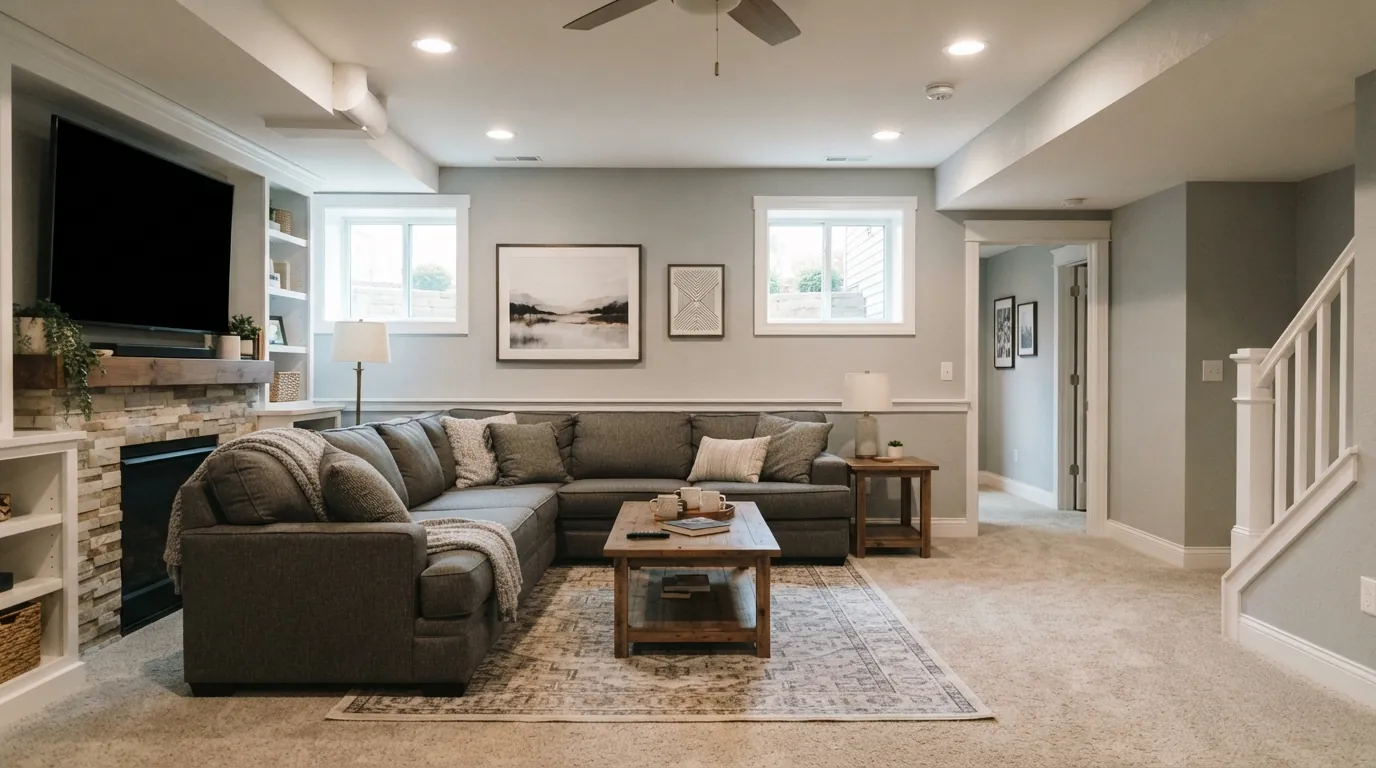
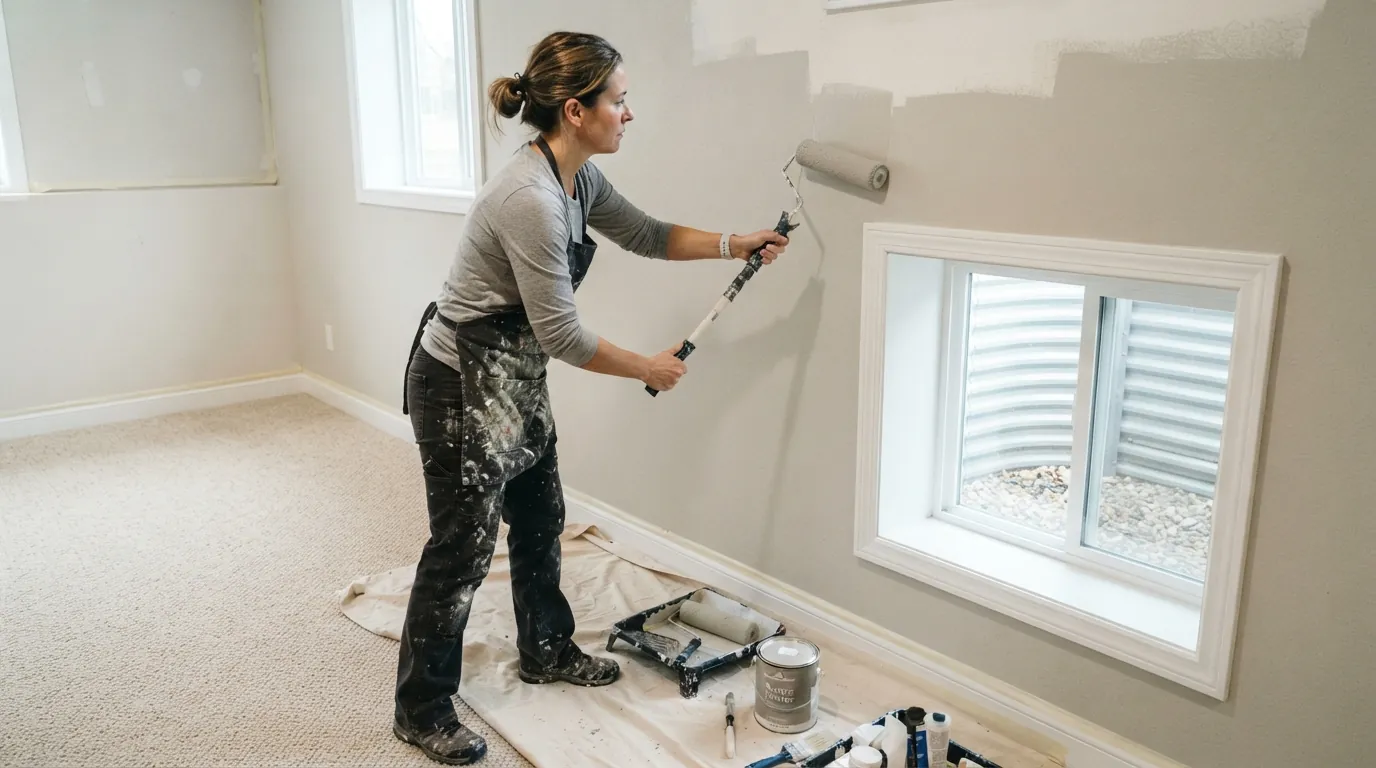
A finished basement is drywall like the rest of the house, but it usually gets harder use as a playroom, gym, guest room or TV room. We patch the dents and nail pops, seal any water stains with a stain blocker, and paint two coats of a washable eggshell or satin. Low ceilings and small windows make light colors worth choosing down here. If there has ever been water on the floor, we check the bottom of the drywall for softness before painting over it.
B
Unfinished block and concrete walls
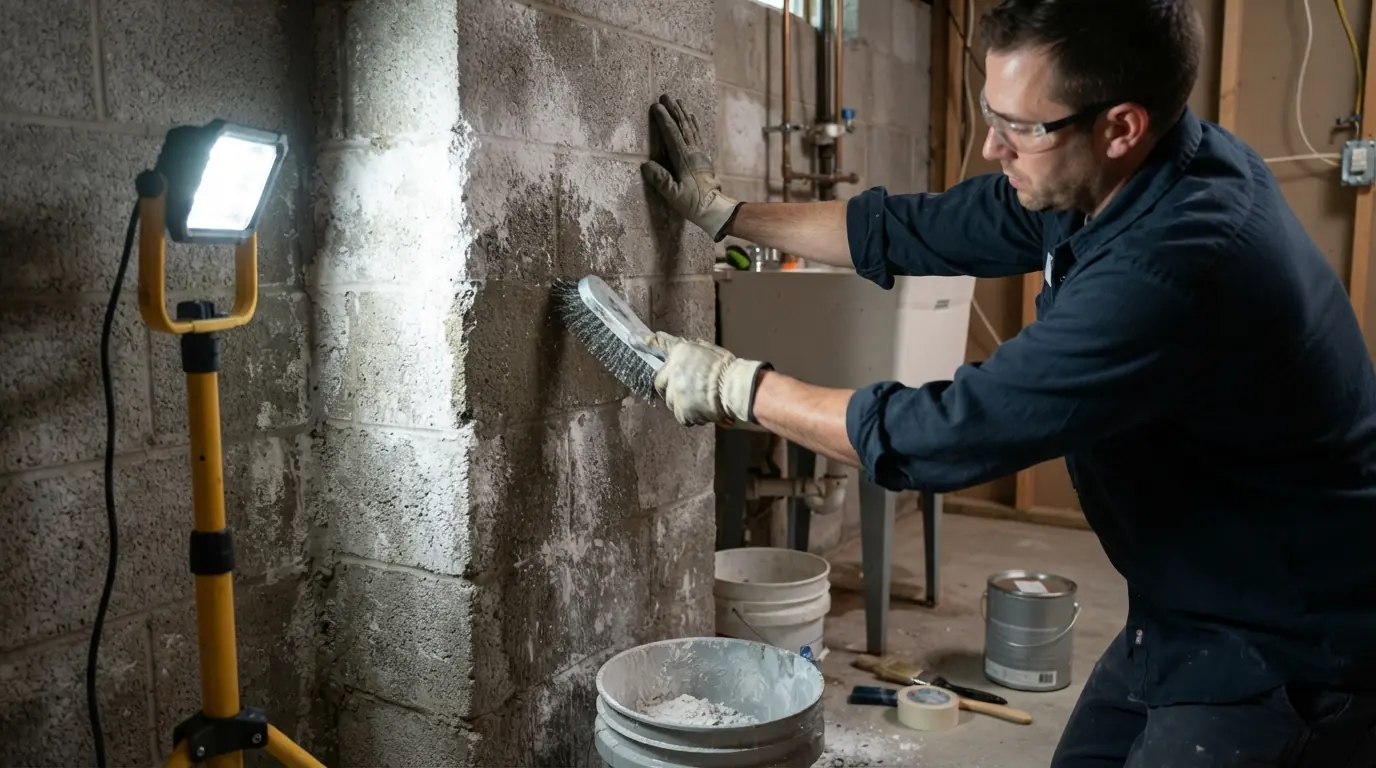
Poured concrete and concrete block can be painted, but only once they are dry and clean. We scrub off efflorescence, the white mineral crust that moisture leaves behind, and scrape any peeling paint. A masonry primer or waterproofing masonry coating goes on first, worked into the pores of the block, then the finish coat. The result is a brighter basement that is easier to clean. It does not stop active leaks, and we will say so if the wall needs a waterproofing contractor first.
C
Basement ceilings
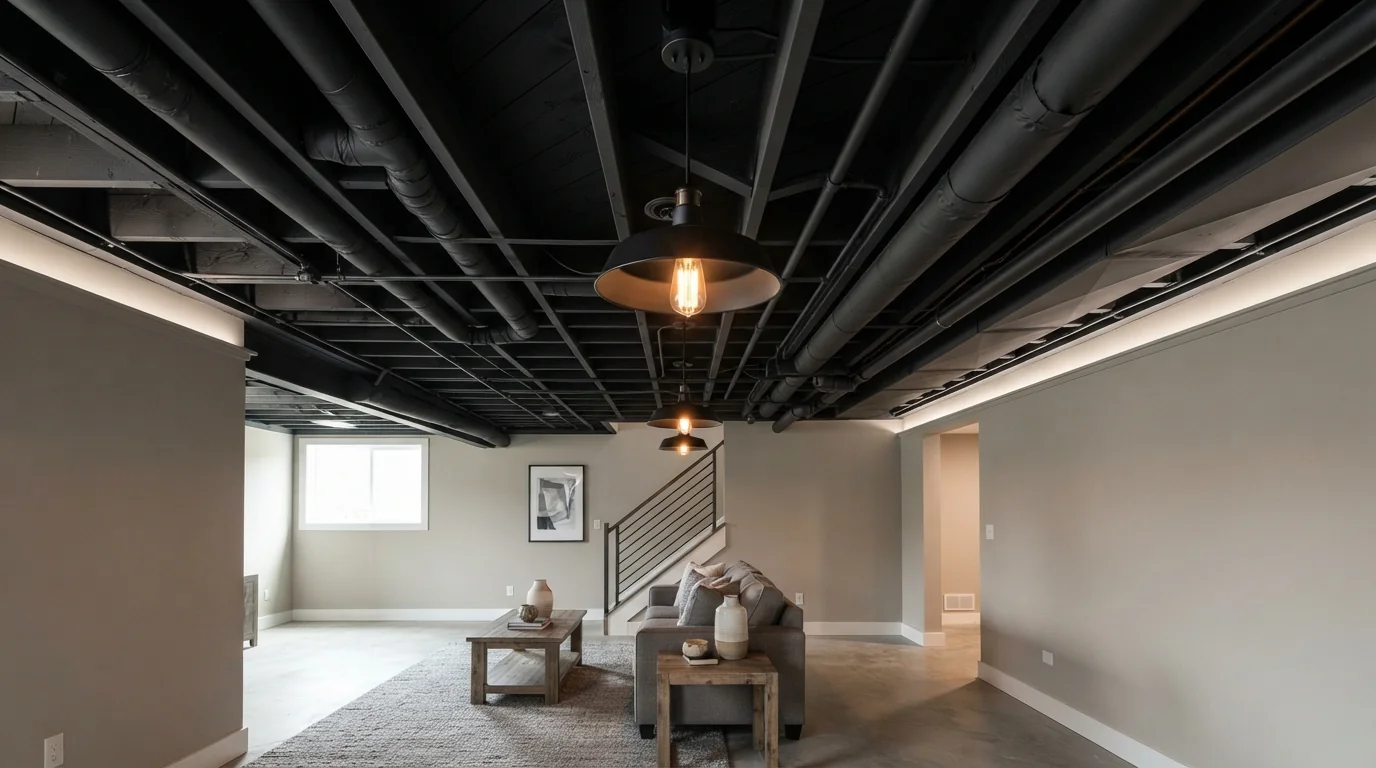
An open basement ceiling, with joists, ducts, pipes and wiring all exposed, is one of the quickest ways to make an unfinished space look finished. Everything below is covered, then the whole ceiling is sprayed one color, usually black, gray or white, so the clutter overhead visually recedes. Wiring, sprinkler heads and fixtures are masked, and anything that gets hot, like flue pipes, is left bare. A drywall ceiling gets flat ceiling paint instead, rolled after any water stains are sealed.
Around Naperville
Naperville sits in a humid continental climate, with moderately high humidity in midsummer, regular thunderstorms and about 36 inches of precipitation a year, most of it in summer. In basements that shows up as condensation on cool block walls in July and damp patches after heavy storms. So we schedule masonry coatings after a dry stretch, test the walls first, and keep a dehumidifier running during the job when the air is heavy.
How the job runs
How a basement job runs
- Step 1
Moisture check and walk-through
We look at every wall, test suspect spots and agree on coatings and colors.
- Step 2
Clear and protect
Storage moves to the center or out, and floors and mechanicals are covered.
- Step 3
Clean and repair
Mineral crust is scrubbed off, loose paint scraped and drywall patched.
- Step 4
Prime
Masonry primer on block and concrete, stain blocker on water marks.
- Step 5
Paint or spray
Walls get two coats and open ceilings are sprayed one color.
- Step 6
Uncover and walk-through
Masking comes off, we check every surface with you and clean up.
Compare the options
Painting a basement yourself, or having us do it
Plenty of homeowners paint a basement themselves. These are the spots where the result changes.
| Item | Doing it yourself | Having us do it |
|---|---|---|
| Moisture check | Easy to skip, and paint peels within a season on a damp wall | We test suspect walls and flag anything that should not be coated yet |
| Crust and old paint | Scrubbing and scraping in a space with little ventilation | Removed and cleaned off before primer |
| Open-joist ceiling | Overhead spraying needs masking, a sprayer and a respirator | Sprayed in one pass with wiring and hot pipes protected |
| Coating choice | Regular wall paint grips bare masonry poorly | Masonry primer or waterproofing coating matched to the wall |
Wall and masonry coatings we use in basements come from Benjamin Moore, Sherwin-Williams and Rust-Oleum.
Benjamin Moore, Sherwin-Williams, JC Licht, Behr, PPG, Valspar, Cabot, Sikkens, Rust-Oleum, Zinsser, Purdy, Wooster
Only once the water source is handled. Paint on an actively damp wall peels, and we will tell you if a waterproofing contractor should come first.
A masonry primer or waterproofing masonry coating, then a finish coat. Standard wall paint does not grip bare concrete well.
A finished basement is usually one to three days. Bare walls and a sprayed ceiling take longer because of cleaning and masking.
A dark color makes joists, ducts and wiring recede, so the space reads as finished. Gray and white work too in brighter rooms.
No. Waterproofing coatings help with dampness and appearance, but they do not stop leaks from cracks or high water outside.
Often booked together
Other jobs that usually come up alongside this one
Answering now
Book a basement painting walk-through in Naperville
Call any hour. We check the walls for moisture, look at the ceiling and send a written estimate with the coatings listed.
