Exterior Painting in Naperville, IL
Exterior house staining in Naperville for cedar siding and shakes
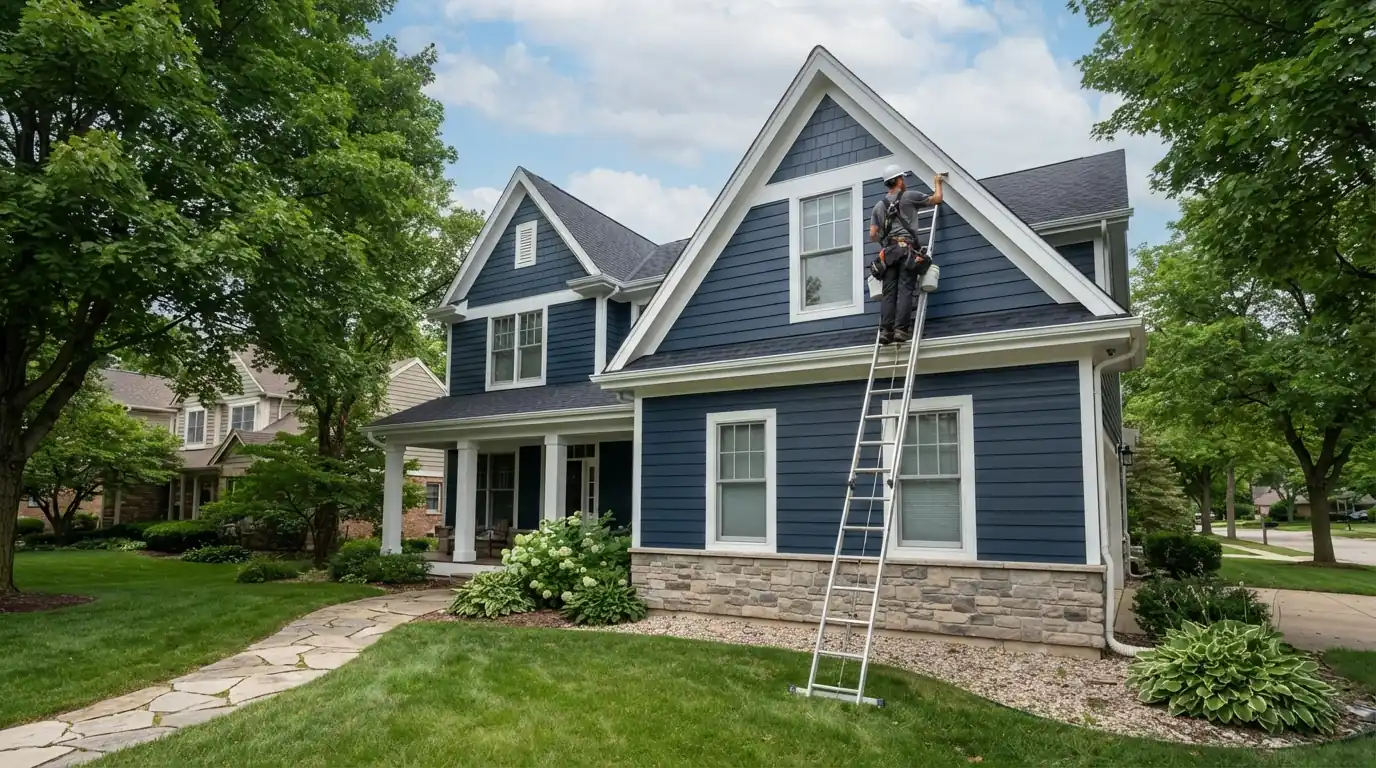
Cedar siding gone gray, blotchy or peeling? We clean, brighten and stain wood exteriors so the grain looks right and the wood sheds water again.
We answer 24/7 and book walk-throughs on the first call.
Answering 24/7Naperville service office
Updated September 2026
This job
Exterior House Staining
Exterior Painting · answering 24/7
Quick answer
Exterior house staining in Naperville, IL means cleaning and brightening cedar or other wood siding, letting it dry, then brushing on a penetrating semi-transparent or a solid stain. Semi-transparent stain on siding usually needs a fresh coat every few years, while solid stain lasts longer but hides more of the grain.
The job
Stain works differently from paint
Stain soaks into the wood rather than forming a thick film, so it weathers away gradually instead of peeling, and a restain is a cleaning and a fresh coat rather than a scrape-and-prime job.
The catch is that stain only soaks into clean, dry, open wood. Gray fibers, mildew and old peeling coatings all have to come off first, which is where most of the work on a staining job sits.
What is included
What an exterior staining job includes
- A walk-around and a test of old coatings
- Plants, windows and lower roofs protected
- Cleaning and brightening of the wood
- Dry time before any stain goes on
- Loose boards refastened and split shakes replaced
- Stain brushed and back-brushed into the grain
- End grain and board edges coated
- A final walk-around in daylight
What this job covers
A
Cedar siding stain
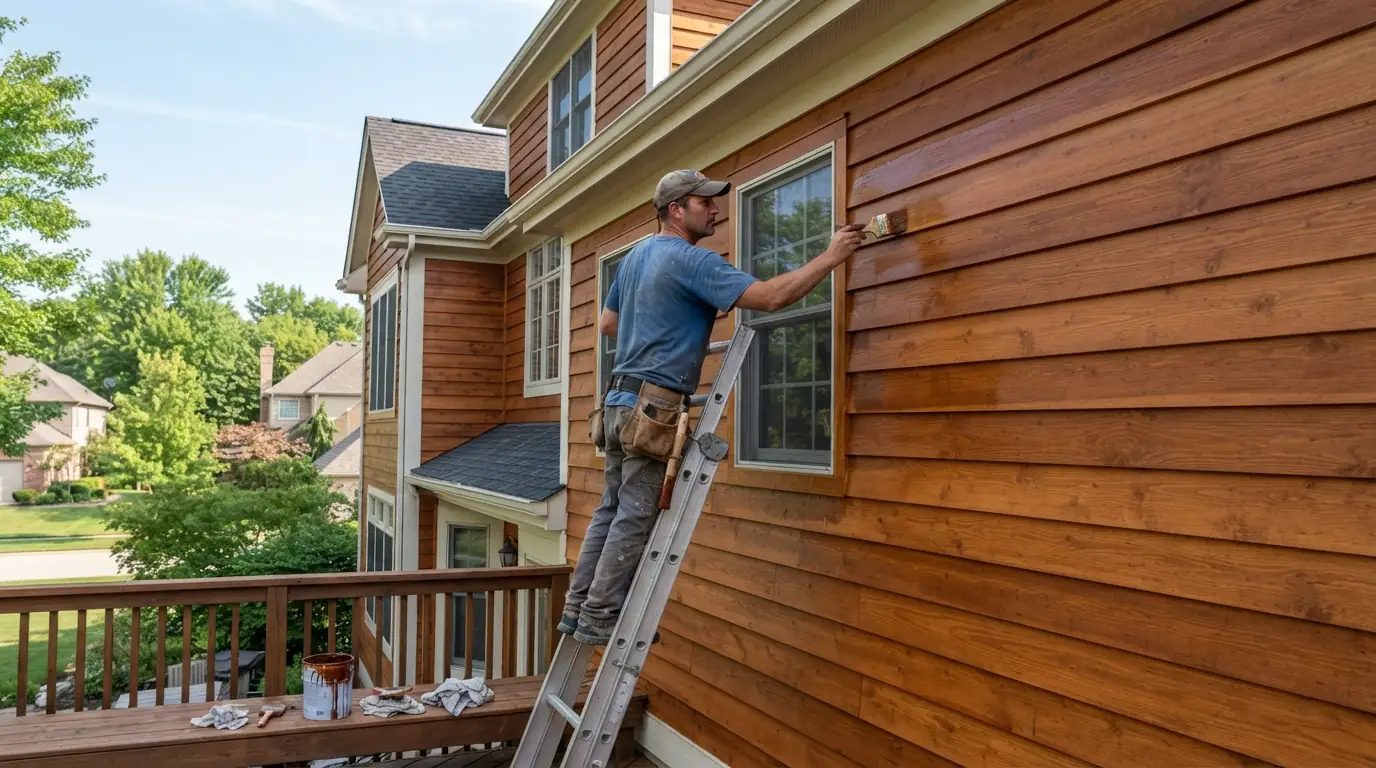
Cedar lap and board-and-batten siding take a penetrating stain that shows the grain and lets the wood breathe. We clean the siding with a wood cleaner and brightener at low pressure, let it dry, then brush the stain into the boards, working along full lengths to avoid lap marks and back-brushing anything sprayed. Board ends and the lowest course near the ground get extra stain, because they soak up the most water. South and west walls weather fastest and set the restain schedule.
B
Cedar shake and shingle stain
Cedar shakes and shingles have rough faces and hundreds of edges, so they take far longer to stain well than lap siding. After cleaning and brightening, split or cupped shakes are replaced and loose ones refastened. Stain is brushed, or sprayed and back-brushed, into the rough face and worked up under each butt edge, where water sits. Shakes that have gone deeply gray usually need a stronger brightening step before the stain will take an even color across the wall.
C
Semi-transparent to solid stain changes
Going from semi-transparent to solid stain is simple: a clean surface and two thin coats of solid color hide weathering and mismatched boards. Going the other way is not, because a solid stain has to be stripped before a semi-transparent will look even. Houses that were painted cannot go back to a natural stain without stripping every board. We test old coatings on a hidden spot and tell you which changes are realistic before you pick a color.
What to look for
Signs your wood siding needs stain
Gray, fuzzy boards
Sun has broken down the surface fibers.
Water soaks straight in
The stain's water resistance is gone.
Blotchy color
Stain has worn unevenly on the sunny walls.
Peeling solid stain
Film-forming stain is failing in spots.
Mildew on shaded walls
Damp sides grow mildew under old stain.
Split or cupped shakes
Dry shakes crack and curl at the edges.
Dark streaks under eaves
Water off the trim is staining bare wood.
Around Naperville
Wood siding here goes through hot, humid summers and long winters with snow sitting against the lowest course, so the bottom boards and the south and west walls wear through their stain first. Stain needs dry wood and nights warm enough to cure, which puts exterior staining between late spring and early fall, after a few dry days. We plan restains around those worn walls, and in some years only the worst sides need a coat while the rest still hold.
How the job runs
How a staining job runs
- Step 1
Walk-around
We check each wall, test old coatings and agree on stain and color.
- Step 2
Protect
Plants, windows, roofs and walks are covered.
- Step 3
Clean and brighten
Siding is cleaned at low pressure and brightened.
- Step 4
Dry and repair
The wood dries; loose boards and split shakes are fixed.
- Step 5
Stain
Stain is brushed and back-brushed into boards and edges.
- Step 6
Final walk
We check coverage in daylight with you.
What moves the price
What moves the price of exterior staining
Staining is priced by wall area and by how much cleaning and repair the wood needs.
- 01Wall area and height
Two-story walls need taller ladders and more set-up.
- 02Siding type
Shakes take far longer than lap siding.
- 03Old coating
Peeling solid stain or paint may need stripping.
- 04Wood condition
Gray, mildewed or split wood adds prep and repairs.
- 05Stain type
Semi-transparent and solid stains differ in cost and life.
- 06Trim and extras
Trim, doors and fences add to the scope.
Exterior stains we apply come from Cabot, Sikkens and Sherwin-Williams.
Benjamin Moore, Sherwin-Williams, JC Licht, Behr, PPG, Valspar, Cabot, Sikkens, Rust-Oleum, Zinsser, Purdy, Wooster
Semi-transparent stain usually every few years; solid stain lasts longer. South and west walls wear first.
Stain soaks in and wears gradually without peeling; paint gives solid color but can peel if moisture gets behind it.
Only by stripping every board, which is slow and costly.
We clean with a wood cleaner at low pressure, since high pressure fuzzes cedar.
Late spring through early fall, after a few dry days, with warm nights.
Often booked together
Other jobs that usually come up alongside this one
Answering now
Book an exterior staining walk-around in Naperville
Call any hour. We check the siding and old stain and send a written estimate.
