Painting guide · Naperville, IL
Checking for wood rot before you paint: a Naperville homeowner's guide
Planning an exterior repaint? Walk the house with a screwdriver first. Paint over rotten wood peels within a season, and the rot keeps spreading underneath.
We answer 24/7 and book walk-throughs on the first call.
By Douglas Woodruff, Painting Guides Editor · Updated September 2026
Guide
Checking for wood rot
By Douglas Woodruff · September 2026
Short answer
Before exterior painting in Naperville, IL, probe the five places water sits: window sills, the bottom of door casings, fascia behind gutters, porch column bases and the lowest course of siding. If a screwdriver tip sinks in or the wood crumbles, it is soft and must be repaired before paint.
Part 1
Where rot starts
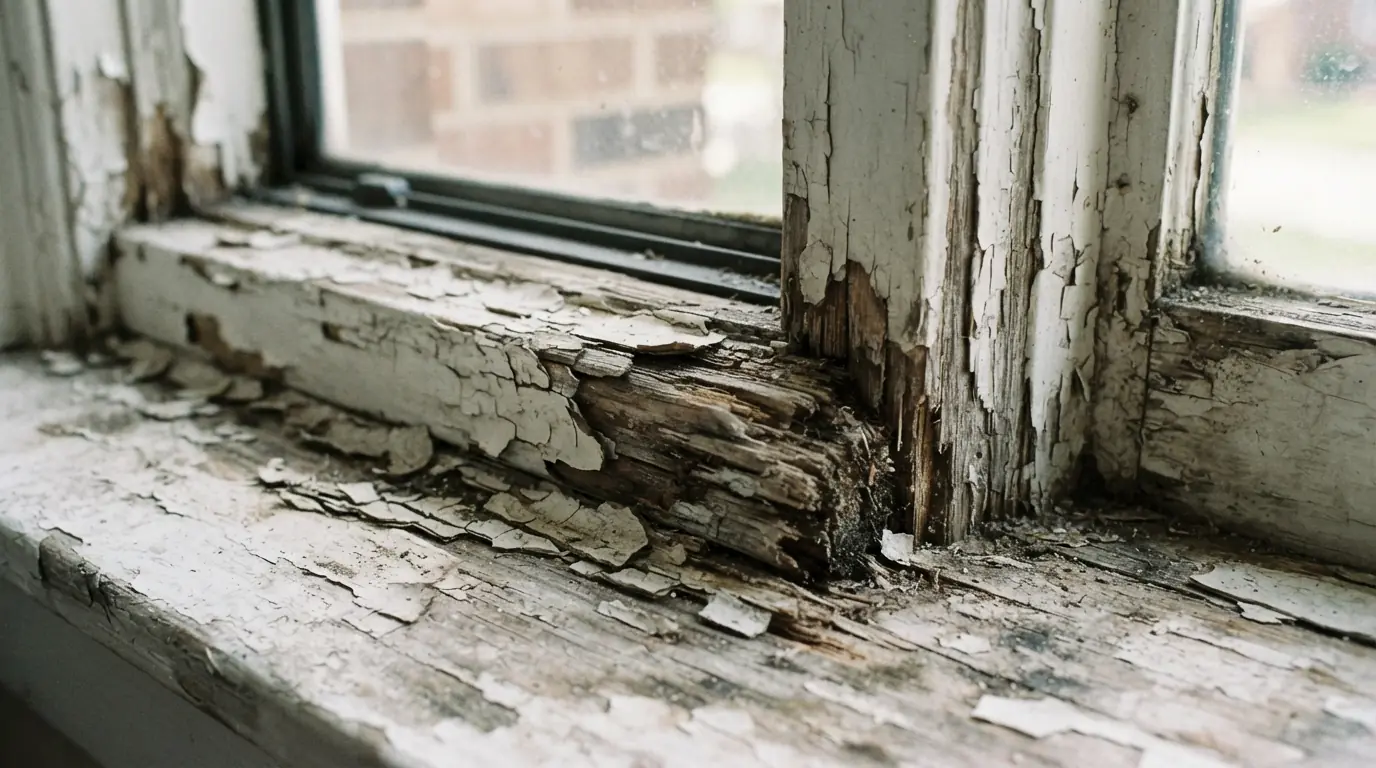
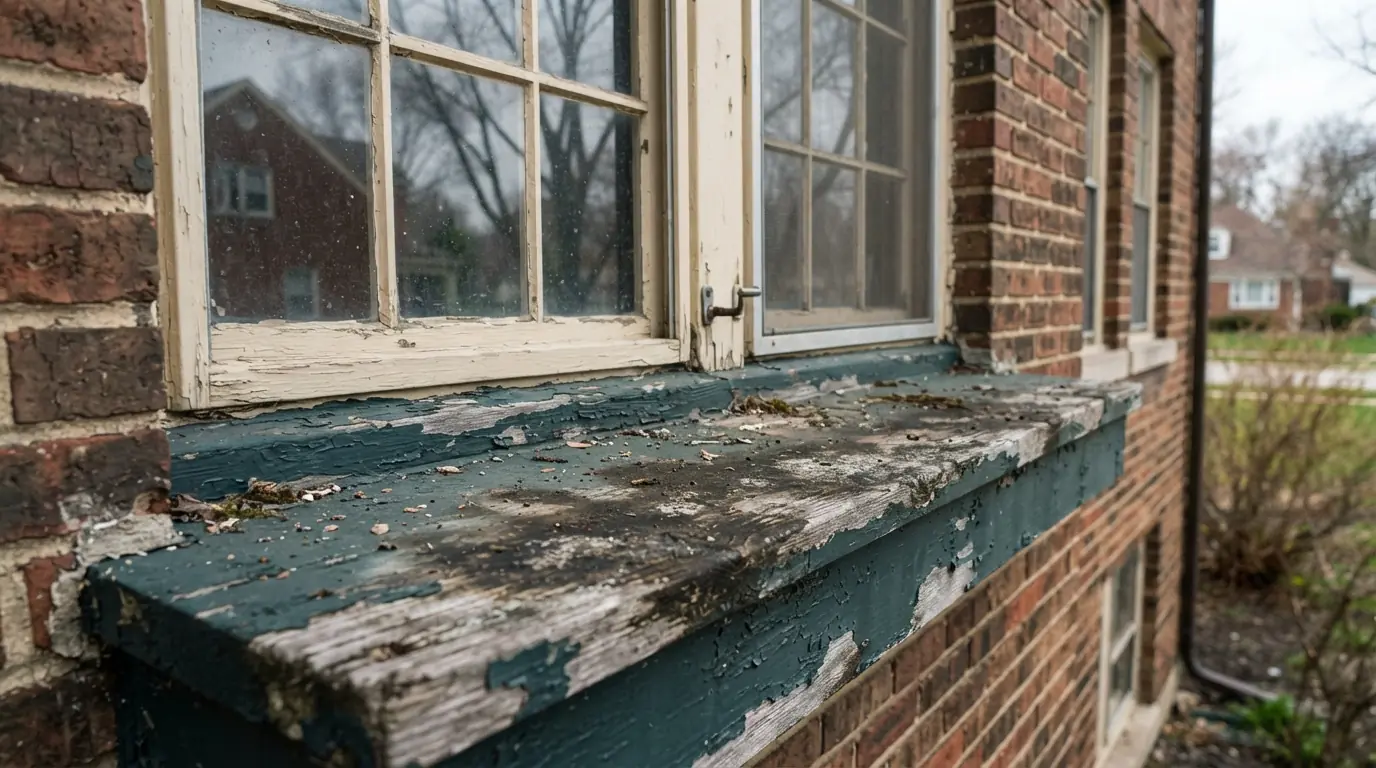
Rot needs wood that stays wet. On a house that means the places water collects or wicks: window sills and the bottom corners of window and door casings, fascia boards behind gutters that overflow, the base of porch columns, the lowest course of siding near soil or mulch, and any joint where caulk has split.
The paint usually tells you first. Cracking and peeling in one small area, especially at a joint, often means moisture behind it.
Part 2
The screwdriver test
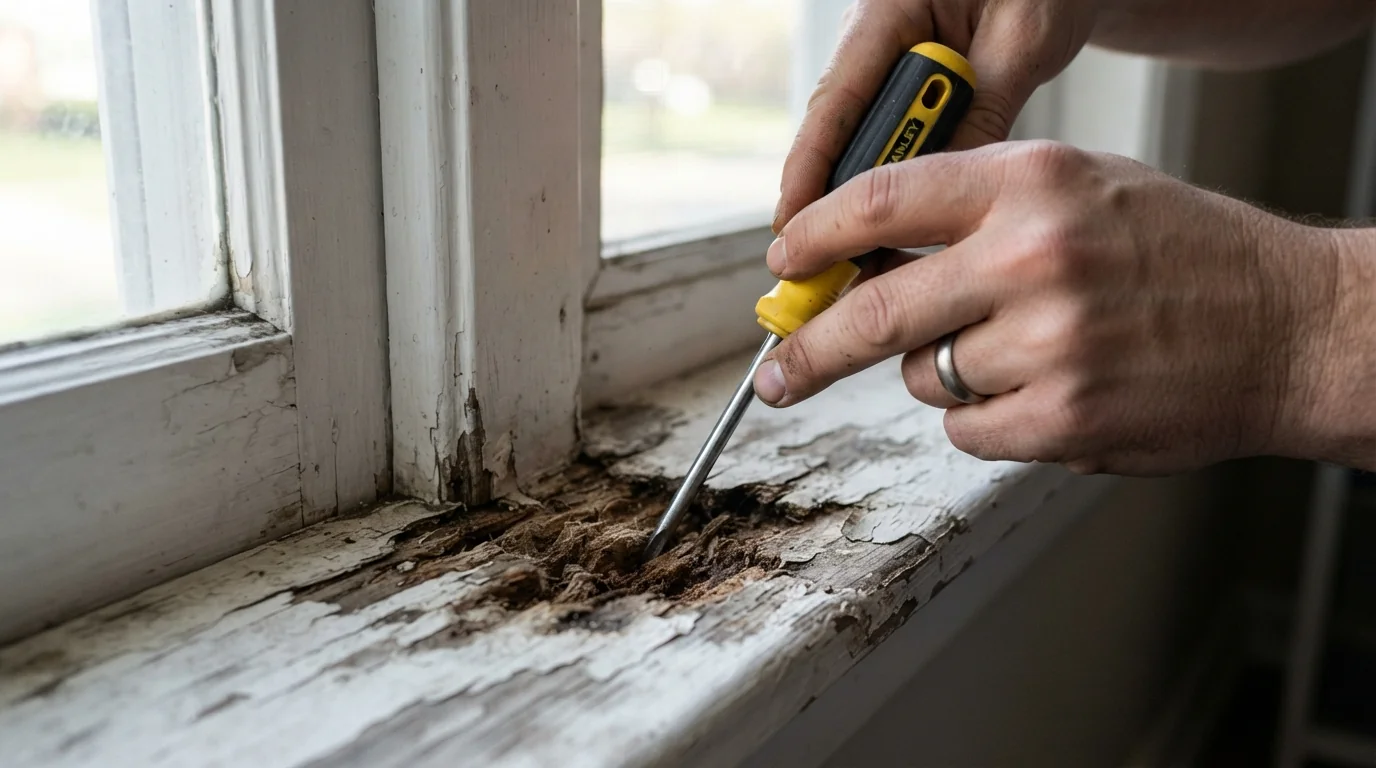
Press a flat screwdriver or an awl into suspect wood with firm hand pressure. Sound wood resists and the tip barely marks it. Soft wood lets the tip sink in, feels spongy, or breaks away in short, crumbly fibers.
Test several spots along a sill or board, since rot spreads beyond what you can see. Note where it stops; that edge decides the size of the repair.
Part 3
Epoxy or new wood
Shallow rot in an otherwise sound piece can be consolidated with epoxy and rebuilt with an epoxy filler, which keeps original trim in place. Deeper rot, or a board that is soft through, is cut out and replaced with new wood or rot-resistant PVC shaped to match. Our wood rot repair page explains both.
Every new piece should be primed on all faces and edges before it goes up. Unprimed backs soak up water and cup.
Found soft wood? Call and we will probe it, photograph it and quote the repair with the paint.
Call (630) 467-7456
Part 4
Fix the cause, not just the wood
Rot comes back if the water does. Look for the source: a clogged or overflowing gutter, a missing drip edge, split caulk at a joint, mulch piled against siding or sprinklers hitting the house.
Fixing the cause is often cheap compared with the repair. It is also why a good trim repaint includes recaulking every joint.
Part 5
What freeze and thaw do here
Chicago-area climate normals show about 102 days a year below freezing. Water that gets into cracked paint and open joints freezes, expands and opens them further, winter after winter, which is why rot here so often starts small at sills and trim bases.
Older houses on streets like North Avenue and 4th Avenue, with median build years in the 1910s and 1920s, have a century of those winters behind them. Original trim on those homes deserves a careful check before any historic repaint.
Part 6
Timing repairs with the paint job
Repairs are best done at the start of an exterior paint job, so new wood is primed and painted with everything else. Plan them in the walk-through, and ask for photos of anything found once boards come off.
If you are not painting this year, small repairs can still be made and primed now to stop the rot spreading until the full repaint.
Part 7
Questions to ask a painter about rot
Ask how they find rot and whether they will show you photos of what they find once boards come off. Ask which repairs they plan to rebuild with epoxy and which they will replace, and whether new wood is primed on every face before it is installed.
Ask how the cause will be handled, such as recaulking, a drip edge or a gutter fix, and how extra repairs are priced if more rot turns up. Clear answers to those questions are a good sign the paint will last.
Press it with a screwdriver. If the tip sinks in or the wood crumbles, the wood is soft.
No. Paint over rot peels quickly and the rot keeps spreading under it.
Standard wood putty is not. Shallow rot needs epoxy consolidant and filler; deep rot needs new wood.
A rot-proof trim material that is shaped like wood and painted to match.
The water source was not fixed. Check gutters, caulk, flashing and soil against the house.
They are best done at the start of the paint job, then primed and painted with the rest.
They have had more winters and more paint failures, so their trim needs a closer check.
Answering now
Talk it through with a painter in Naperville
Call any hour. We answer questions on the phone and book a walk-through when you are ready.
